
Beyond the bus stop: How urban mobility is reshaping London’s communities — and what Bogotá can teach us about the future of cities
16 February 2026 - By Marco Biagioli
Beyond the bus stop: How urban mobility is reshaping London’s communities — and what Bogotá can teach us about the future of cities
By Marco Biagioli London, UK
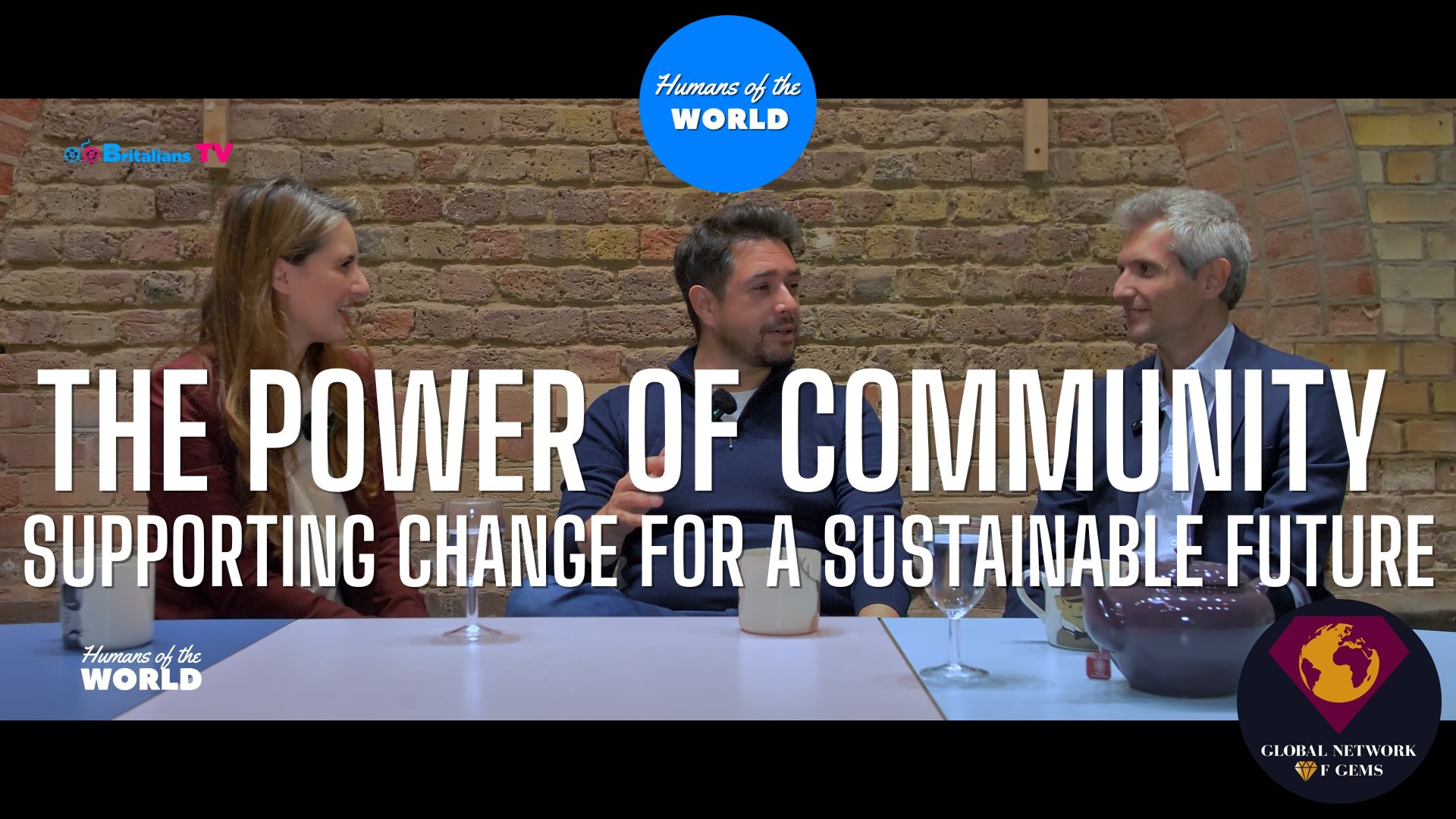
When Erica Melargo and I welcomed urban planning expert Daniel Oviedo to the Britalians TV studio, our conversation quickly moved past small talk about London’s famously unpredictable transit delays. What emerged was for me a far broader exploration of how cities move people, who gets left behind, and critically, why the future of urban life may depend less on flying cars and more on a 15-minute walk to the nearest pharmacy, nursery, or park. Oviedo, a Colombian civil engineer and associate professor at UCL’s Bartlett Development Planning Unit, brought firsthand experience from Bogotá’s revolutionary bus rapid transit system and decades of research into equitable mobility. However, I know that no single voice—no matter how authoritative—can tell the whole story. The real work, as I realized, begins when individual expertise is connected to neighborhood realities, policy trade-offs, and the communities they ultimately serve.
What follows is my personal exploration of the themes that conversation uncovered, verified against public data, urban research, and on-the-ground developments across London and beyond. For me, mobility isn’t just about infrastructure; it’s fundamentally about access, equity, and who gets to shape the city we live in.
THE FOUNDATION: QUANTITY FIRST, QUALITY SECOND
London’s transport network is a remarkable 150-year-old masterpiece. Yet, as Erica noted during the broadcast, aging infrastructure and soaring demand are forcing a reckoning. Oviedo’s own career mirrors this tension closely. Growing up in Bogotá during the early 2000s, he watched his city transform when unreliable, unsafe transit gave way to TransMilenio—one of the world’s largest bus rapid transit (BRT) systems that moves up to 43,000 to 45,000 passengers per hour per direction.
“You have to get quantity first,” Oviedo explained, “Then you figure out quality.”
This principle resonates far beyond Latin America. In rapidly growing cities across the Global South, transport isn’t just about moving people; it is arguably a catalyst for development. When a road is excavated, I see its potential to lay water mains, sewer lines, fiber optics, or even renewable energy conduits beneath the surface. Urban economists and municipal planners consistently point out that integrating these systems requires cross-departmental coordination—a formidable hurdle which many local governments still struggle with.
In London, the Elizabeth Line didn’t just slash commute times for us; it triggered density shifts, housing developments, and commercial reinvestment around new stations. That is transit-oriented development (TOD) in action: using mobility infrastructure to shape land use, reduce sprawl, and concentrate opportunity. But I also had to consider that TOD raises uncomfortable questions. When station-adjacent land values surge, who can afford to stay? How do cities ensure that efficiency doesn’t translate into exclusion?
THE 15-MINUTE CITY: PROXIMITY OVER SPEED
I’ve come to see that speed is no longer the primary goal; proximity is. The “15-minute city” concept, pioneered by French urbanist Carlos Moreno, envisions neighborhoods where daily needs—healthcare, groceries, education, green space—are within a short walk or cycle. Oviedo and I explored how this model de-congests city centers, cuts carbon emissions, and reduces the pressure on peak-hour transit networks in ways that are deeply appealing to me.
Yet, the challenge is not solely physical; it’s cultural. As Erica highlighted, in many societies, the car remains a status symbol. This sentiment, as she observed—that “If you don’t have a car, you’re nobody”—still holds significant weight across parts of Europe, North America, and beyond. Oviedo pointed out that changing this mindset requires making active travel not just practical, but genuinely desirable. Public health campaigns like the “10,000 steps” movement are vital because they help us reframe walking as an achievement rather than a merely necessary chore.
Still, I am cautious about creating a “Lycra army” of competitive cyclists while entirely ignoring those who rely on second-hand bicycles, parents navigating strollers, or delivery workers balancing weight and safety. True equity, I believe, means designing protected lanes, level crossings, and shaded sidewalks that serve every single user regardless of income, age, or ability. The goal must not be to eliminate vehicles; it’s simply to make them truly optional.
MICROMOBILITY, SUBSIDIES, AND THE EQUITY GAP
Micromobility, electric scooters and e-bikes have flooded London’s streets, promising greener, quieter commutes for all of us. But the peer-reviewed research from UCL and transport bodies across Europe reveals a troubling trend: shared e-scooters are increasingly replacing bus trips, not car journeys. The reason I think this is happening is straightforward: compact, integrated neighborhoods don’t yet exist at scale. Without reliable public transit or safe cycling corridors, micromobility becomes nothing more than a convenience for those who can afford it, while lower-income residents—who depend on subsidized buses—face indirect displacement.
In London, bus services are heavily supported by the congestion charge, a policy that funnels revenue from private vehicle users directly into TfL’s operating budget. The visible investments like wheelchair-accessible “kneeling” buses, concessionary fares for seniors, and integrated Oyster/contactless pricing demonstrate how mobility can be beautifully structured as a public good—a concept I find vital. Nevertheless, as Oviedo pointed out, political will too often lags behind the hard evidence. Expanding free or discounted travel demands overcoming ingrained fiscal conservatism and lobbying from automotive interests.
Sustaining equitable systems also requires transparency. The Bartlett’s commitment to open-source research ensures that findings aren’t locked away behind academic paywalls for anyone to access. I see how communities in informal settlements across Latin America and Southern Africa have successfully used publicly available mobility data to advocate for basic infrastructure: paved sidewalks, street lighting, drainage. In London, similar open-data initiatives empower neighborhood forums to hold developers and transport authorities accountable when promises of “people-first streets” fall short on the ground.
FUTURE TECH VS. SYSTEMIC REFORM
So what about the flashy future we talk about? Autonomous vehicles, aerial mobility pods, AI-optimized traffic grids—they dominate tech summits and venture capital decks. But I remember Oviedo’s caution against mistaking novelty for necessity. “We’re always looking at the future through the lens of a car,” he said, and that rings incredibly true to me.
In practice, driverless personal vehicles feel like they risk entrenching inequality, serving only early adopters with high disposable income. I believe automation may be far more valuable for freight logistics, warehouse distribution, or improving public transit safety—much like London’s fully automated Docklands Light Railway, which has moved millions safely for decades without a single operator in the cab. Moreover, the push to electrify millions of private cars overlooks a simpler urban math problem: if every London household drove daily, there would be nowhere to park, and emissions savings would be dramatically offset by increased road space demand.
The real innovation, I feel, lies in redesigning streets for people, not machines. As climate pressures mount and housing affordability crises deepen, cities worldwide are learning that mobility intersects dramatically with social cohesion, economic access, and environmental justice. A reliable bus route can fund a nursery. A tree-lined corridor replaces a parking lot. Open data empowers a residents’ association. For me, the future of London won’t be decided by the top speed of a vehicle, but by the equity of access for all its inhabitants.
WHY THIS MATTERS TO OUR COMMUNITIES
Britalians TV doesn’t just record conversations; it uses them as springboards into the issues that shape how we live together. The dialogue with Daniel Oviedo illuminated one common, undeniable thread: sustainable urbanism isn’t built on single solutions, but on interconnected systems.
For myself and any reader navigating morning commutes, school runs, or weekend trips across London, the implications are immediate. Every council planning consultation, transport strategy review, and local budget allocation hinges upon these same critical questions. Will new developments prioritize car storage or cycle parking? Will bus frequencies hold as funding pressures mount? Who truly benefits when a station upgrades, and who pays the price of rising rents?
The evidence is clear: Cities that invest in proximity, protect vulnerable users from traffic danger, subsidize essential transit, and treat infrastructure as a multi-purpose tool will see stronger local economies, lower health costs, and more resilient neighborhoods. The challenges—political short-termism, fragmented municipal departments, and decades of car-centric zoning—are daunting. But so are the responses I advocate for: community-led data collection, open academic research, policy experiments like congestion pricing and pedestrianized high streets, and a growing cultural shift that values time and health over status symbols.
Every road dug, every subsidy approved, and every policy debated eventually answers one core question: who gets to move, and who gets left behind? As I see it, the answer is currently being written not in boardrooms or tech labs, but on the sidewalks, bus stops, and cycle paths of everyday life. And this conversation reminds me that those spaces belong to all of us.
Written by
Marco Biagioli
Episodes in this Article

London ► S12 E2
The Future of Cities: Transportation
In this Article

Global Network of Gems
Featuring


Marco Biagioli
Actor and TV Presenter


Erica Melargo
Actor and TV Presenter
In this Article
News

10 December 2021
“I sent my Résumé to NASA every week for a year”: Meet Aerospace Engineer Thomas Ivanco
2026-03-25 08:41:20
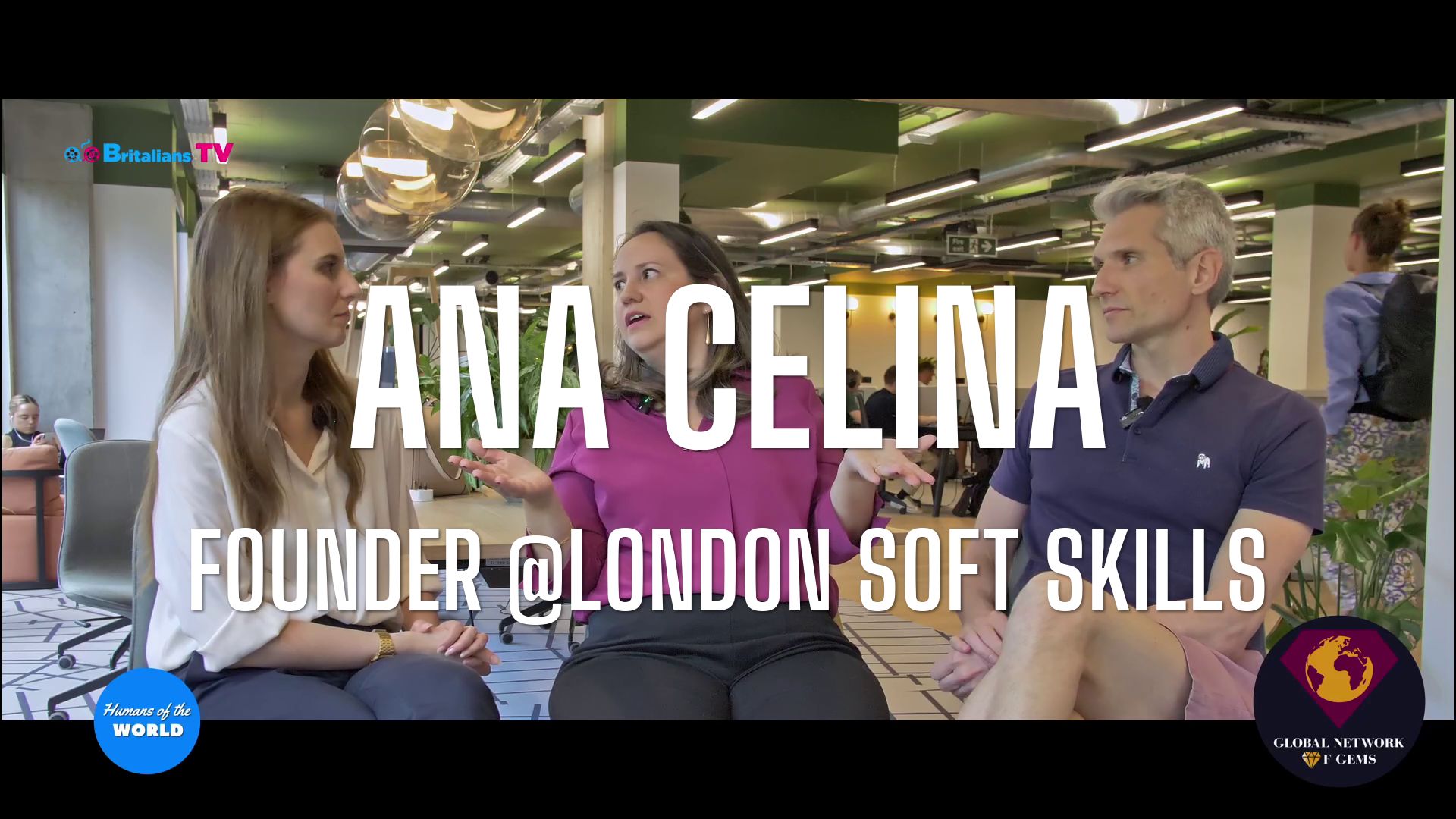
“Life Is Too Short to Be Shy”: How One Brazilian Immigrant’s Journey From Cancer Survivor to Soft Skills Entrepreneur Reveals London’s Hidden Loneliness Epidemic

21 February 2022
“You cannot change the past, but only you can change the future!”

16 January 2025
“I Wanted to Help People”: Deputy Supervisor Rick Marsh of Tuxedo, the Gem of New York, on Humans of the World with Marco and Erica

30 November 2021
“Il cielo è il limite e tu sai che puoi avere / Quello che vuoi, sii quello che vuoi”.

31 August 2021
“SIAMO TUTTI SULLA STESSA MUCCA”

30 July 2021
“Tu non puoi cambiare il passato, ma tu solo puoi cambiare il futuro!” Primo piano di aspirazioni e obiettivi del fotografo Arnt Eriksen.
2 July 2021
#TRUELIFE: Marco and Erica spotted at DAM Health Covid-19 Test centre
2 July 2021
#TRUELIFE: Marco ed Erica di nuovo in viaggio!

24 December 2021
61 Motivi per Trasferirti all’Estero
24 December 2021
61 Reasons Why You Should Move Abroad

8 November 2021
A Britalian in Rome: the actress Jane Alexander

16 July 2021
A caccia di aurore boreali
29 January 2023
A Chocolate Extravaganza In Vermont- Humans of the World third Season Flies Across The Pond
15 November 2024
A Conversation with Dr. Markus Naser: The Unlikely Mayor of Rothenburg ob der Tauber
15 November 2024
A Day in the Life of Oliver Gußmann: Rothenburg's Tourist Pastor
15 November 2024
A Glimpse into the Life of Laura: Embracing Family, Theater, and Cultural Diversity

23 July 2021
A journey into the atelier of Cipessa Prin

6 July 2022
A Miniature Artist Explains to Marco and Erica How to Put Things into Perspective

17 January 2022
A talent in… Nashville!