
From Bedford to Oxford: How Language, Loss and Legacy Shape a Heritage Community
2026-05-11 09:02 - By Marco Biagioli and Erica Melargo
From Bedford to Oxford: How Language, Migration and Identity Shape a Heritage Community
By Marco Biagioli
The story of Bedford-born psychologist Dr Antonina Anna Scarnà explores how migration, bilingualism and family expectations continue to shape identity, education and belonging in England’s heritage communities.
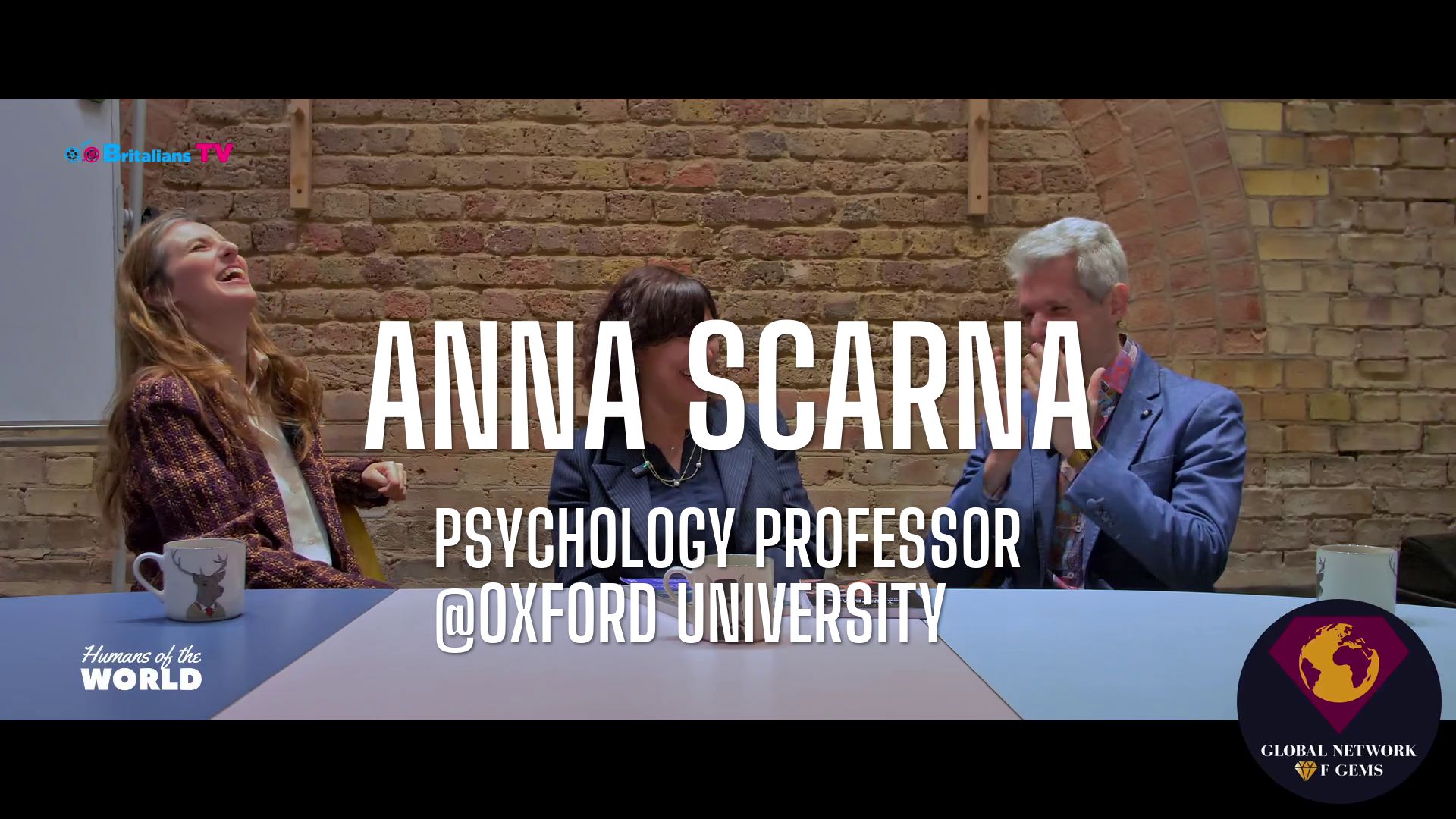
When Erica Melargo and I spoke with Oxford psychologist Dr Antonina Anna Scarnà, the conversation began with language and quickly moved into questions of identity, migration and belonging. Scarnà, whose family migrated to Bedford from Italy, described experiences that connect her personal story with wider changes in England’s heritage communities.
Her reflections on bilingual language, family expectations and the experience of growing up between cultural worlds offer a local perspective on issues affecting schools, families and community organisations. Bedford’s history of Italian migration provides an important part of that context: post-war arrivals helped shape the town’s communities, workplaces and cultural life, while their children and grandchildren continue to negotiate what heritage means today
Bedford’s Italian Heritage and the Language of Belonging
During the interview, Dr. Scarnà described a linguistic phenomenon familiar to countless heritage families: words like la fenza (the fence), boostato, or chattare. I realised these aren’t errors at all. They are functional adaptations born at the intersection of two languages, two cultures, and one shared kitchen table – what linguists call code-switching; what the community simply calls survival.
Dr. Scarnà’s research provides a way of understanding why these hybrid expressions matter. Bilingual brains don’t store words in separate filing cabinets for them to observe; they map them to context, frequency, and emotional safety. Her research shows that naming latency increases when multiple linguistic tags compete – not because bilingualism is a deficit, but because the brain is actively negotiating cultural frames. A monolingual speaker sees “cup.” But a heritage speaker might access tazza, mug, regional dialect, or childhood association, each carrying a weight of relation I found fascinating.
For bilingual speakers, words can be associated not only with meaning but with context, family relationships and memories. Code-switching can therefore become part of how heritage speakers navigate different social and cultural environments.
The linguistic story has a particularly local history in Bedford. During the post-war period, Italian migrants arrived in Bedfordshire to work in industries supporting the region’s economic growth, helping establish families and community networks that remain part of the town today. Their children and grandchildren inherited more than family traditions: they also inherited languages, accents, expressions and cultural references that continue to evolve across generations. Today, ONS Census data shows that while around 6% of households across England and Wales speak multiple main languages, heritage communities in diverse urban hubs like Birmingham, London, and Leicester mirror Bedford’s historic linguistic evolution.
Yet I also see the friction this creates. School systems often misread code-switching as poor English proficiency for us. Parents can face implicit pressure to “purify” their home language for academic success, sometimes severing cultural transmission in the process. What our conversation illuminated is that hybrid language isn’t a failure of integration; it’s evidence of successful navigation – and for schools, the question is practical: how should teachers distinguish between genuine difficulties with English and the normal linguistic flexibility of children growing up with more than one language? Better understanding of heritage-language use could help schools communicate with families while avoiding assumptions that bilingualism itself represents a disadvantage.
Growing Up Between Cultures: Family Expectations and Resilience
When Erica asked whether early academic pressure creates trauma or resilience, our talk shifted from linguistics to psychology. Dr. Scarnà recounted being placed in a classroom of 14-year-olds at age six by her mother, who saw immersion as the fastest path to retention. At the time, it felt like displacement; but in hindsight, it became proof that learning, for me, has no expiration date.
This story is emblematic of a much broader transgenerational pattern I believe we need to address. Migration is seldom chosen; it’s usually necessitated by economic constraint or political upheaval. First-generation immigrants often operate under conditions of scarcity, which translates into crushing high expectations for their children. The result isn’t always clinical trauma, but it frequently manifests as heightened responsibility, accelerated maturity, and an inherited work ethic that leaves little room for perceived failure.
I found the psychological research to be incredibly validating of what heritage families have long known: early caregiver bonds form the blueprint for adult emotional regulation. Attachment theory proves that when children learn safety through consistent interaction, they develop internal working models that aid them navigating stress later in life. Conversely, inconsistent bonding can transmit hypervigilance across generations. Dr. Scarnà’s work with primatology case studies – comparing Washoe to Nim Chimpsky – offers a stark metaphor: environment shapes capacity. Nurture isn’t just about what is taught; it’s about who makes learning feel safe for us all.
Today, UK youth mental health services report rising rates of anxiety and identity fragmentation among second and third-generation students, particularly those caught between cultural expectations and individual aspirations. For young people navigating different cultural expectations, pressure can also intersect with wider concerns about anxiety, belonging and educational achievement. Support from families, schools and community organisations can play an important role in helping young people navigate those pressures.
Charities like Mind emphasize that resilience isn’t the absence of pressure; it’s the presence of support systems that allow us to process it. What Dr. Scarnà’s interview underscores for us is that heritage communities don’t need less ambition; they need more scaffolding.
Rethinking Intelligence: Adaptation Over Acceleration
I steered the conversation toward a question increasingly pertinent in an AI-saturated, fast-paced society: What does it actually mean to be intelligent? Dr. Scarnà’s answer diverged sharply from traditional metrics. She described intelligence not as speed or rote retention, but as adaptive regulation: the ability to interpret context, manage emotional responses, choose when to speak and, crucially, when to listen, and pivot when environments shift.
This perspective perfectly aligns with evolving educational frameworks. Ofsted’s guidance emphasizes socio-emotional health (SEMH) alongside academic attainment, rightly recognizing that cognitive performance collapses under unmanaged stress. Educational research increasingly recognises that academic attainment is only one part of how young people learn to navigate complex social and cultural environments.
I also noted how definitions of intelligence vary culturally. British tradition often prizes early independence; Italian family structures historically emphasize interdependence and communal identity. Neither is inherently superior to us. What matters is the alignment between expectation and environment. When a child is asked to navigate conflicting value systems without mediation, confusion masks itself as inadequacy. But when they are given tools to translate both, adaptability truly flourishes.
Dr. Scarnà’s point about “mindless” intuition – the brain’s ability to recognize patterns without conscious labeling – is a challenge to modern education’s obsession with constant output. In an era where algorithms can generate essays and code, the uniquely human advantage I see lies in contextual awareness, ethical navigation, and emotional calibration. Intelligence, redefined for us, becomes less about how fast we retrieve information and more about how wisely we apply it.
What Could Bedford’s Communities Do Next?
This interview is a starting coordinate and our questions about trauma, language, and intelligence didn’t just probe Dr. Scarnà’s expertise, they raised practical questions for Bedford and other diverse communities. How can schools support children who grow up speaking more than one language? How can libraries and community organisations preserve heritage languages while creating spaces where different generations meet? And how can local mental-health services recognise the cultural context in which families experience stress, loss and belonging?
The task ahead isn’t to preserve these traces in amber, but to understand how they inform modern identity formation for all of us.
Dr. Scarnà’s upcoming work on the Psychology of Loss – exploring grief or diaspora experiences – signals where this inquiry must go next. Identity loss isn’t always dramatic; sometimes it is that quiet erosion of belonging when neighborhoods gentrify, when second-generation professionals feel disconnected from both heritage and mainstream spaces, or when educational systems prioritize compliance over curiosity.
I believe communities that thrive are those that treat conversation as infrastructure. Local libraries hosting bilingual storytelling nights, schools integrating heritage language clubs and mental health practitioners developing stronger cross-cultural awareness – are practical examples of how community organisations could respond; they are public health interventions we desperately need.
These initiatives would not replace mainstream services; they could make them more accessible and relevant to the communities they serve.
Why This Matters in Bedford and Beyond
Dr. Antonina Scarnà’s journey from Bedford to Oxford provides a personal route into questions facing many communities across England. Language, family expectations and cultural identity do not disappear between generations; they evolve. Understanding that process can help schools, community organisations and public services respond more effectively to the people they serve.
The conversation began with a question about language but ended somewhere much larger: what does it mean to belong to a place when your family history stretches across borders? Bedford’s Italian heritage community offers one answer. Belonging is not about choosing between identities. It is about finding ways for different histories, languages and generations to exist together – and allowing that diversity to become part of the community’s future.
In Britain’s changing demographic landscape, I believe the answer lies in recognizing that heritage isn’t a relic; it’s an operating code we must learn to read. And communities that manage to do this won’t just survive change, they’ll steer it.
Written by
Marco Biagioli and Erica Melargo
Episodes in this Article
Gem of New York ► S15 E9
Conor Eckert’s Vision for Sustainable Growth
In this Article
Global Network of Gems
Featuring

Marco Biagioli
Actor and TV Presenter


Erica Melargo
Actor and TV Presenter
In this Article


News
10 December 2021
“I sent my Résumé to NASA every week for a year”: Meet Aerospace Engineer Thomas Ivanco
2026-03-25 08:41:20
“Life Is Too Short to Be Shy”: How One Brazilian Immigrant’s Journey From Cancer Survivor to Soft Skills Entrepreneur Reveals London’s Hidden Loneliness Epidemic
21 February 2022
“You cannot change the past, but only you can change the future!”
16 January 2025
“I Wanted to Help People”: Deputy Supervisor Rick Marsh of Tuxedo, the Gem of New York, on Humans of the World with Marco and Erica
30 November 2021
“Il cielo è il limite e tu sai che puoi avere / Quello che vuoi, sii quello che vuoi”.

31 August 2021
“SIAMO TUTTI SULLA STESSA MUCCA”
30 July 2021
“Tu non puoi cambiare il passato, ma tu solo puoi cambiare il futuro!” Primo piano di aspirazioni e obiettivi del fotografo Arnt Eriksen.
2 July 2021
#TRUELIFE: Marco and Erica spotted at DAM Health Covid-19 Test centre
2 July 2021
#TRUELIFE: Marco ed Erica di nuovo in viaggio!

24 December 2021
61 Motivi per Trasferirti all’Estero
24 December 2021
61 Reasons Why You Should Move Abroad
8 November 2021
A Britalian in Rome: the actress Jane Alexander
16 July 2021
A caccia di aurore boreali
29 January 2023
A Chocolate Extravaganza In Vermont- Humans of the World third Season Flies Across The Pond
15 November 2024
A Conversation with Dr. Markus Naser: The Unlikely Mayor of Rothenburg ob der Tauber
15 November 2024
A Day in the Life of Oliver Gußmann: Rothenburg's Tourist Pastor
15 November 2024
A Glimpse into the Life of Laura: Embracing Family, Theater, and Cultural Diversity
23 July 2021
A journey into the atelier of Cipessa Prin

6 July 2022
A Miniature Artist Explains to Marco and Erica How to Put Things into Perspective
17 January 2022
A talent in… Nashville!