
The Human Equation: How Emotional Intelligence Is Reshaping Relationships, Work, and Self-Worth in an Age of Shortcuts
2025-08-01 05:34 - By Erica Melargo
The Human Equation: How Emotional Intelligence Is Reshaping Relationships, Work, and Self-Worth in an Age of Shortcuts
By Erica Melargo
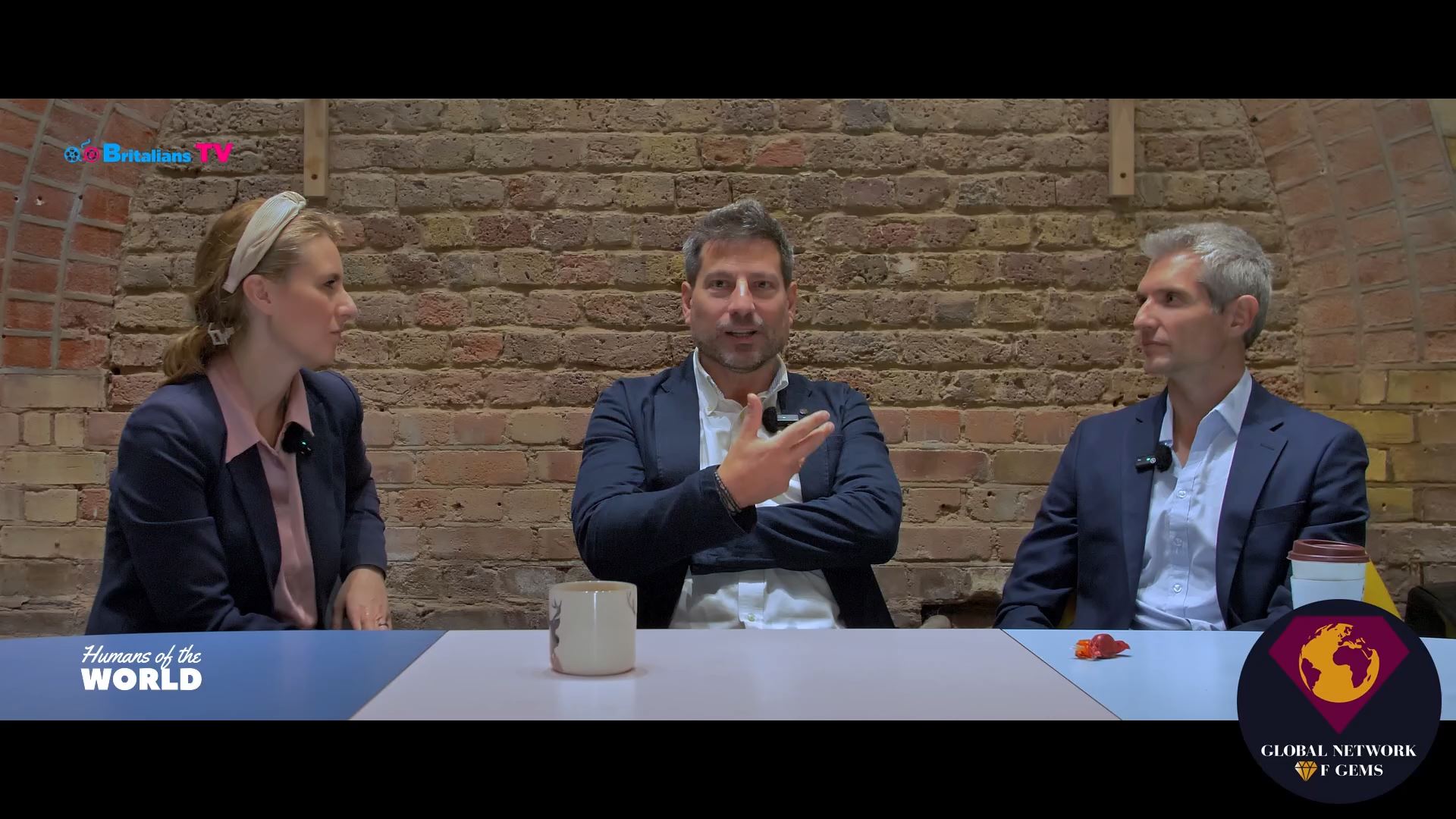
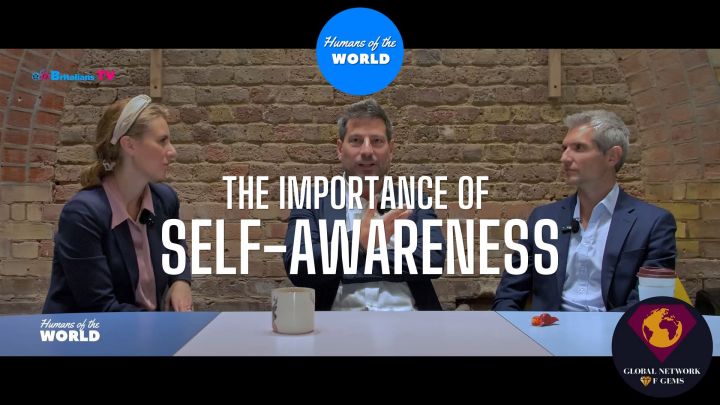
In a media landscape that seems hungry for quick fixes and algorithmic summaries, Professor Constantine Petrides argues something increasingly vital for me: we are living fragmented lives—always chasing metrics while ignoring the emotional current that actually drives us. During our Britalians TV conversation, this was less a clinical dissection of psychology and more a mirror held up to modern relationships, workplace culture, and the quiet crisis of self-awareness in our communities today.
I always feel that at Britalians TV, conversations are never finished stories; they are meant to be starting points for us all of us. What emerged from Professor Petrides’ expertise is an investigation into how we navigate love, work, identity, and digital distraction—all within the local context of our communities.
The Cost of Inner Censorship
One concept that really resonated with me was the danger of emotional censorship. Professor Petrides described it to us not as a permanent state of calm, but as the much-needed capacity to let emotions arise and pass without internal policing. The idea he shared—that suppressing fear or sadness doesn’t eliminate them; it just compounds them into chronic stress and relationship friction—is something we all experience.
This aligns with clinical research I’ve read about. Acceptance and Commitment Therapy (ACT) emphasizes psychological flexibility, not suppression. A study we reviewed showed that people practicing non-judgmental awareness reported lower anxiety and higher relationship satisfaction than those who actively tried to control or ‘fix’ how they felt for me.
In our multicultural neighborhoods, where stoicism is sometimes still culturally praised, the taboo around expressing vulnerability can delay help-seeking until a crisis emerges. Professor Petrides’ warning against “fighting yourself” struck me as both philosophical and a vital public health consideration. Local advocates here in London report that destigmatizing emotional fluctuation—rather than pathologizing normal human responses—is key to encouraging earlier, healthier interventions within our communities.
Psychometrics as a Bridge, Not a Label
When I asked what psychometrics actually measures, Professor Petrides traced it back to its Greek roots: psyche (mind/soul) and metrics. He explained that it is far more versatile than just IQ or personality quizzes; he sees it as a framework for understanding emotional intelligence, teamwork dynamics, and even compatibility in our romantic or business partnerships.
He agreed with my initial thought process, explaining that his current work focuses on compatibility assessments that map emotional profiles rather than diagnosing anything negative. However, he stressed the vital caution: metrics are starting tools, not destinations. “You can’t live your life based on bullet points,” he cautioned me. “They help you begin to pay attention. Then it has to become organic.”
This careful view is supported by research showing that teams with high emotional congruence report fewer conflicts and faster decision-making, especially in creative sectors like ours. I agree that organizational psychologists caution against treating psychometrics like a crystal ball. These tools are most effective when used alongside ongoing communication and deep contextual awareness. They can surface blind spots before partnerships inevitably fracture.
The Escapism Economy
Perhaps the most provocative discussion point for me was Professor Petrides’ critique of modern escapism—the constant digital overload, the never-ending feeds, the performance of productivity—and how it reflects a deeper avoidance of our inner reality. He connected this to workaholism and compulsive scrolling, noting that these often mask unresolved emotional or existential friction points in our lives.
When I joked about my own struggle with notification fatigue, he reframed it not as a quirk but as a symptom: “If you switch off all these devices and just stay with yourself, everything inside starts coming up.”
This observation resonates so strongly with the local data. UK reports show that while screen time is at historic highs, feelings of genuine loneliness have doubled since 2018. In British-Italian communities, where strong traditional family structures often meet hyper-connected digital lives, I see an acute tension between communal expectation and personal saturation for many young people.
Professor Petrides argued powerfully that salary-driven career choices, while economically rational, often reflect a “low level of consciousness” when divorced from our personal alignment. He made a key distinction for me: excellence is an internally driven expression; perfectionism is externally imposed compliance. We need to recognize the toll of this misalignment in all sectors.
Beyond the Bullet Point: Self-Awareness as Practice
When I asked how one actually cultivates self-awareness, Professor Petrides was characteristically direct: there are no shortcuts. He pointed out that using an AI summary for reflection is inadequate. “If you’re not ready to sit with yourself,” he stated, “it’s just decoration.”
I acknowledge the criticism—that this stance favors those who have time and safety to simply “slow down.” But his point holds undeniable empirical weight: benefits only emerge when self-reflection is sustained and internally motivated, not performed as mere compliance. What shines through from our talk is a call for graduated self-honesty. Local community centers are even piloting “reflection circles” that pair peer dialogue with light psychometric check-ins—proving to me that structured support and organic growth can coexist beautifully.
Why This Matters Now
The Britalians TV studio might be small, but the themes Professor Petrides helped bring out ripple outward across our whole community. In an era dominated by algorithmic curation and gig-economy precarity, his work reminds us that human complexity cannot simply be optimized away. Emotional intelligence isn’t a mere corporate training module; it is the foundation of how we negotiate difference in families, how we lead teams, how we date intentionally, and how we define success beyond purely transactional metrics for ourselves.
The hosts are seeing that fragmented solutions yield fragmented results. A parent stressed by work while supporting a teen struggling with social media doesn’t need another checklist item—they need frameworks that reconnect outer symptoms to inner patterns. That’s where psychometrics becomes less about measurement and much more about mapping the emotional landscape for our whole community.
As the conversation ended, I reflected on his final statement: “I don’t work toward targets. I work toward excellence every day. And I’m already where I need to be.” It’s a powerful defiance of our culture of perpetual striving. For everyone who reads this, the true takeaway isn’t about passing a test or fixing a relationship through data. It is about reclaiming attention.
Written by
Erica Melargo
Episodes in this Article
London ► S12 E3
The Importance of Self Awareness
In this Article

Global Network of Gems
Featuring

Marco Biagioli
Actor and TV Presenter


Erica Melargo
Actor and TV Presenter
In this Article





News
10 December 2021
“I sent my Résumé to NASA every week for a year”: Meet Aerospace Engineer Thomas Ivanco
2026-03-25 08:41:20
“Life Is Too Short to Be Shy”: How One Brazilian Immigrant’s Journey From Cancer Survivor to Soft Skills Entrepreneur Reveals London’s Hidden Loneliness Epidemic
21 February 2022
“You cannot change the past, but only you can change the future!”

16 January 2025
“I Wanted to Help People”: Deputy Supervisor Rick Marsh of Tuxedo, the Gem of New York, on Humans of the World with Marco and Erica
30 November 2021
“Il cielo è il limite e tu sai che puoi avere / Quello che vuoi, sii quello che vuoi”.

31 August 2021
“SIAMO TUTTI SULLA STESSA MUCCA”

30 July 2021
“Tu non puoi cambiare il passato, ma tu solo puoi cambiare il futuro!” Primo piano di aspirazioni e obiettivi del fotografo Arnt Eriksen.
2 July 2021
#TRUELIFE: Marco and Erica spotted at DAM Health Covid-19 Test centre
2 July 2021
#TRUELIFE: Marco ed Erica di nuovo in viaggio!

24 December 2021
61 Motivi per Trasferirti all’Estero
24 December 2021
61 Reasons Why You Should Move Abroad
8 November 2021
A Britalian in Rome: the actress Jane Alexander

16 July 2021
A caccia di aurore boreali
29 January 2023
A Chocolate Extravaganza In Vermont- Humans of the World third Season Flies Across The Pond

15 November 2024
A Conversation with Dr. Markus Naser: The Unlikely Mayor of Rothenburg ob der Tauber
15 November 2024
A Day in the Life of Oliver Gußmann: Rothenburg's Tourist Pastor

15 November 2024
A Glimpse into the Life of Laura: Embracing Family, Theater, and Cultural Diversity
23 July 2021
A journey into the atelier of Cipessa Prin

6 July 2022
A Miniature Artist Explains to Marco and Erica How to Put Things into Perspective
17 January 2022
A talent in… Nashville!