
Beyond the decibel: How London’s noise problem is shaping community life
2025-10-01 08:41 - By Erica Melargo
Beyond the decibel: How London’s noise problem is shaping community life
By Erica Melargo
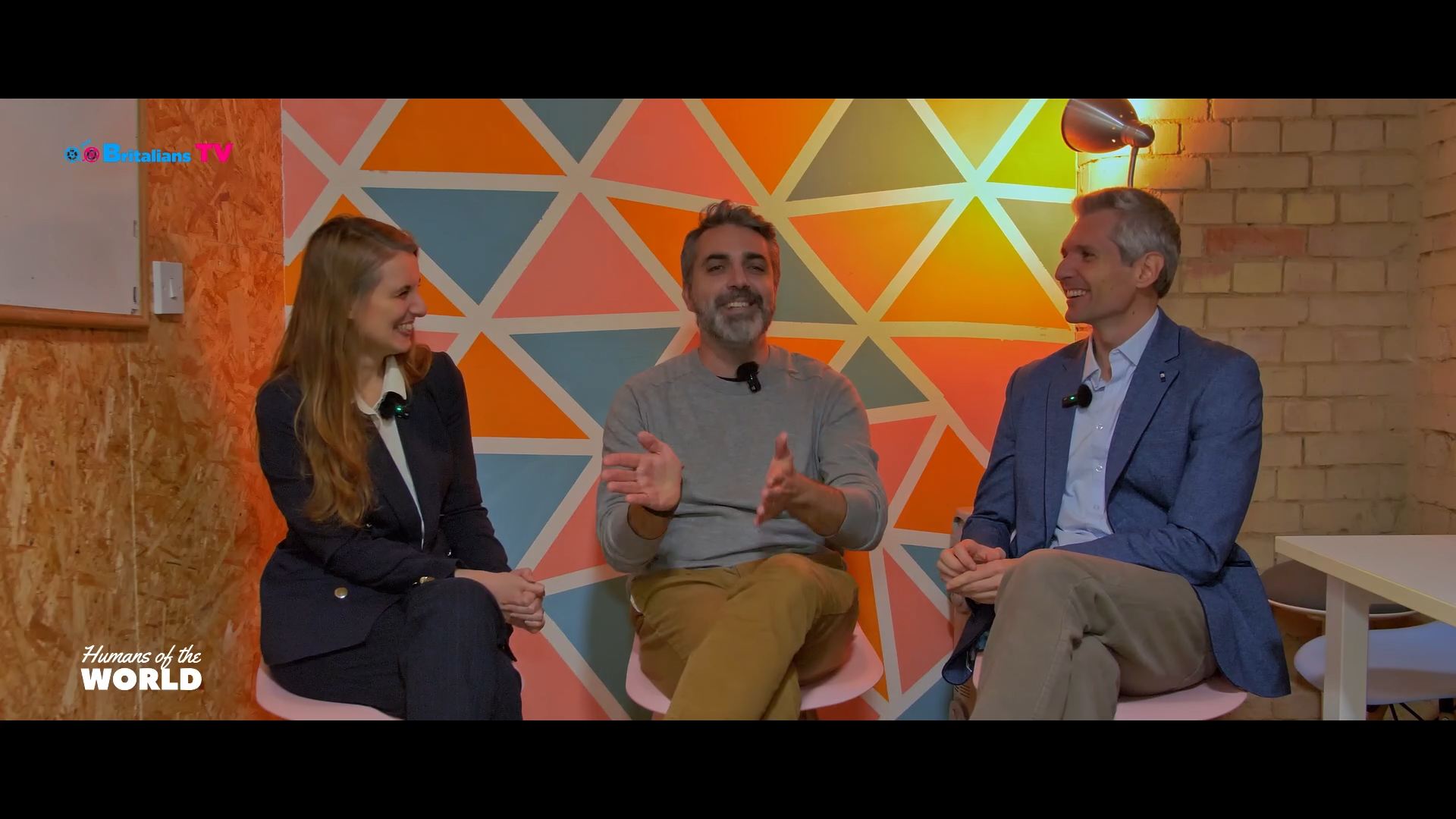
The conversation in the studio with Francesco Aletta – a researcher from Naples and lecturer at UCL – was fascinating. Over coffee, what began as a lighthearted chat about parenting and accidental career paths quickly unfolded for us into an exploration of a huge urban challenge: it’s not just how loud things are in London; it’s how we experience them, who controls that experience, and what we are willing to negotiate for the sake of vibrant neighborhoods.
I found that this discussion was invaluable because it forced us to look past simple measurements of noise. The key takeaway is that acoustic comfort isn’t just a technical problem; it is fundamentally a social one.
The Paradox of Quiet Cities
When the pandemic hit, and noise levels plummeted due to lockdown, I remember how media covered the sudden silence, celebrating the return of birdsong. But Francesco pointed out a contradiction for me: shortly after, local authorities started receiving more noise complaints, even though decibel readings were objectively lower.
Environmental psychologists confirmed this phenomenon. Urban sound acts as a critical social cue – the hum of traffic or distant conversation signals that life is functioning normally. When those expected cues disappear, they can trigger feelings of isolation and anxiety for us in densely populated areas like London. Public health data supports this shift: the WHO guidelines identify things like traffic noise as risks, but recently studied effects are highlighting non-auditory issues – stress, cognitive fatigue, and diminished mental well-being. I see that merely following decibel thresholds doesn’t automatically translate into true acoustic comfort for residents here.
When Decibels Don’t Tell the Whole Story
While technical solutions like soundproofing or barriers certainly have their place when noise crosses into hazardous territory, Francesco taught me a crucial lesson: “Noise is like true love. If you give it a chance, it will find its way to you.” Insulation simply delays sound; it rarely eliminates what we experience. More critically, human tolerance seems governed far less by physics than by our sense of control and expectation.
This finding was powerful because it shifts where the focus needs to be placed. Research in environmental stress consistently shows that having a perceived degree of control over an environment dramatically reduces annoyance. If residents know a nearby venue will close at 1 am, or if they know exactly when a building renovation is scheduled, their frustration drops – even if the peak noise levels remain unchanged.
I think we also need local authorities to show us how to bridge this gap between legal compliance and actual lived experience. The answer, I believe, lies in transparency and community involvement. It’s about setting clear expectations for what a neighborhood expects from its neighbors.
Negotiating London’s Neighborhoods shared Soundscape
The tension between commercial vibrancy and residential peace is nowhere more visible than in London’s bustling entertainment districts. These areas thrive on late-night economies, but I hear constantly of adjacent housing blocks bearing the acoustic cost. Francesco’s research suggests that technical fixes alone are rarely enough to solve these deep conflicts. The most successful interventions, he explained, typically require three elements: predictable scheduling, early stakeholder dialogue, and shared information.
What remains underexplored is how to scale these negotiations across an entire city. While the Mayor has funded huge initiatives for the night-time economy, I believe acoustic equity needs to be built into zoning briefs equally. Urban planners are beginning to pilot “acoustic impact assessments,” but public participation tools need to catch up. Until we can reliably collect and verify perception data, policy will continue to treat noise as a purely technical problem rather than a social one that impacts culture and mood.
What London Can Learn From Global Sound Research
I found the cultural element of soundscapes especially potent. Francesco highlighted research comparing European and Chinese preferences – Western participants consistently ranked birdsong and natural sounds as highly restorative, while Eastern respondents showed different appreciations for human-driven vibrancy in their street life. This isn’t just anecdotal; it reflects how differently our societies organize public space and value community presence based on cultural background.
The challenge of generalizing these differences into data is immense, but understanding this variability means we cannot design for sound one way and expect it to work everywhere else. It shows that even the attempt to measure something as subjective as “calm” must respect its global complexity. This makes us realise that designing for sound truly means designing for people – and people hear differently depending on where they are from, what their culture values, or what they’ve been taught about daily routine.
Francesco’s conversation was never just about a decibel level or an academic theory. It was about how cities sound when life is lived at full volume: the clinking cups of a Neapolitan morning, the unpredictable energy of London, and the quiet anxiety that can settle over silence for me.
What I took away from our chat is that acoustic well-being isn’t built through earplugs or mere enforcement alone. It’s built through transparent information, culturally aware design, predictable routines, and a collective willingness to genuinely listen – not just to meters, but to each other in a shared space.
I believe the challenge for London, and indeed all of us, is not to mute the noise. It’s to help our communities hear themselves clearly. Francesco Aletta’s research highlights a growing challenge for London: creating neighbourhoods where businesses, residents and public spaces can coexist. As the capital continues to grow, the debate around noise will increasingly depend not only on regulations and decibel limits, but on how communities communicate, negotiate and design shared urban spaces.
Written by
Erica Melargo
Episodes in this Article

London ► S12 E5
The Sound of Cities: Francesco Aletta on Noise, Urban Living, and Resilience
In this Article

Global Network of Gems
Featuring


Marco Biagioli
Actor and TV Presenter

Erica Melargo
Actor and TV Presenter
In this Article




News

10 December 2021
“I sent my Résumé to NASA every week for a year”: Meet Aerospace Engineer Thomas Ivanco

2026-03-25 08:41:20
“Life Is Too Short to Be Shy”: How One Brazilian Immigrant’s Journey From Cancer Survivor to Soft Skills Entrepreneur Reveals London’s Hidden Loneliness Epidemic

21 February 2022
“You cannot change the past, but only you can change the future!”

16 January 2025
“I Wanted to Help People”: Deputy Supervisor Rick Marsh of Tuxedo, the Gem of New York, on Humans of the World with Marco and Erica

30 November 2021
“Il cielo è il limite e tu sai che puoi avere / Quello che vuoi, sii quello che vuoi”.

31 August 2021
“SIAMO TUTTI SULLA STESSA MUCCA”

30 July 2021
“Tu non puoi cambiare il passato, ma tu solo puoi cambiare il futuro!” Primo piano di aspirazioni e obiettivi del fotografo Arnt Eriksen.
2 July 2021
#TRUELIFE: Marco and Erica spotted at DAM Health Covid-19 Test centre
2 July 2021
#TRUELIFE: Marco ed Erica di nuovo in viaggio!

24 December 2021
61 Motivi per Trasferirti all’Estero
24 December 2021
61 Reasons Why You Should Move Abroad

8 November 2021
A Britalian in Rome: the actress Jane Alexander

16 July 2021
A caccia di aurore boreali
29 January 2023
A Chocolate Extravaganza In Vermont- Humans of the World third Season Flies Across The Pond
15 November 2024
A Conversation with Dr. Markus Naser: The Unlikely Mayor of Rothenburg ob der Tauber
15 November 2024
A Day in the Life of Oliver Gußmann: Rothenburg's Tourist Pastor
15 November 2024
A Glimpse into the Life of Laura: Embracing Family, Theater, and Cultural Diversity

23 July 2021
A journey into the atelier of Cipessa Prin

6 July 2022
A Miniature Artist Explains to Marco and Erica How to Put Things into Perspective
17 January 2022
A talent in… Nashville!