
Running Toward Self-Discovery: How Young Mediterraneans Are Reclaiming Intimacy, Independence, and Identity
2026-01-02 08:39 - By Erica Melargo
Running Toward Self-Discovery: How Young Mediterraneans Are Reclaiming Intimacy, Independence, and Identity
By Erica Melargo (Britalians TV)
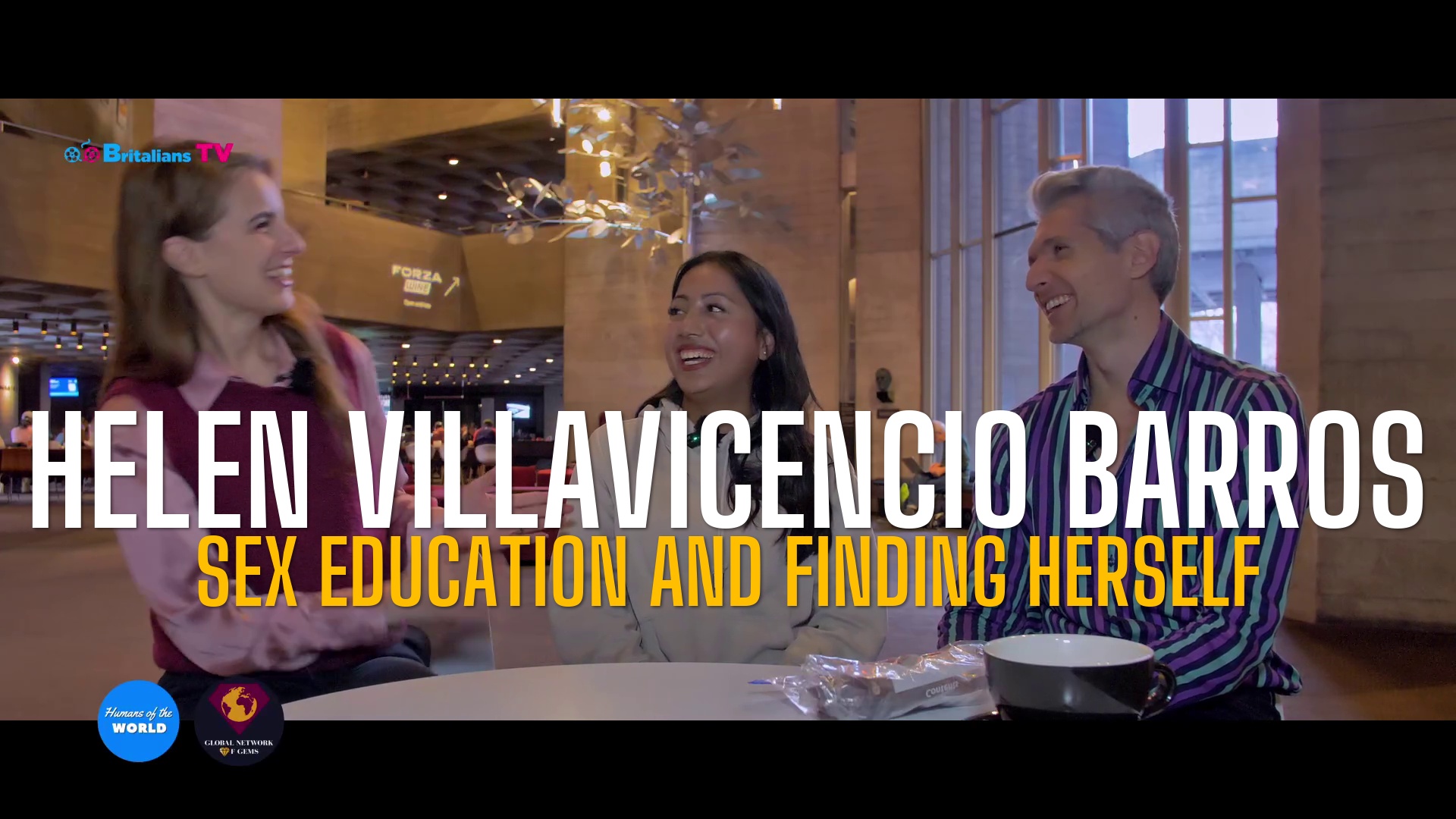
Bartalians TV begins with conversations; our interviews provide the foundation for our journalism, but they are never the finished story. When 22-year-old Helen from Barcelona sat down with Marco and me during a recent stopover in London, her personal journey quickly revealed something far larger than one woman’s post-breakup reflection. What started as a casual chat about solitude, half-marathons, and sex education unfolded into a window into a quiet cultural shift sweeping across Mediterranean youth: a deliberate turn inward, a redefinition of intimacy, and a growing demand for bodily autonomy in societies where tradition often speaks louder than science.
Helen’s story is not an outlier; it is a mirror. And through careful listening, contextual research, and community dialogue, we are tracing how individual choices are reshaping everyday life for young Europeans navigating work, wellness, and selfhood.
The Turn Inward: Solitude as Strategy, Not Isolation
“I had a relationship, but now I think that I want to be very, very me,” Helen told me during the interview. After two years of partnership, she chose to step back. No replacement, no rush. Just space.
What sounds like a personal preference aligns with a documented demographic and psychological trend. Eurostat data shows that among Europeans aged 20–34, the proportion living alone or prioritizing independent household formation has risen steadily over the past decade, particularly in urban centers. In Spain, youth unemployment rates and delayed economic independence have long postponed traditional life milestones, but mental health awareness is increasingly cited as a primary driver for intentional solitude. Psychologists note that structured “me time” is no longer framed as avoidance, but as active self-regulation—a way to rebuild identity after relational entanglement.
When Marco observed this pattern during our conversation: “There’s a quiet rebellion happening. Young people aren’t rejecting connection; they’re refusing to outsource their sense of self to someone else.” Helen’s decision to travel solo to London for the BC London event, framing it as a “gift to myself,” deeply resonated with me, reflecting a broader cultural recalibration. The community impact is tangible: local wellness centers, co-working spaces, and independent social clubs are seeing higher engagement from young adults seeking environments that support autonomous growth rather than forced networking or romantic pairing.
Running Against the Grain: Movement as Mindfulness
When Helen talks about running, she doesn’t speak of times, splits, or medals; she speaks of silence. “It’s the way I can be with myself,” she explained to me. “My brain stops to think. It’s just focused. It makes you be.”
Her mother’s reaction is telling: “A woman doesn’t run. She runs the house.” This generational divide shows a shifting relationship between physical activity, mental health, and gender roles. Through my research, I reviewed studies consistently linking endurance running with reduced cortisol levels, improved emotional regulation, and enhanced neuroplasticity. In the UK alone, nearly 4 million adults participated in road running in 2023, according to Sport England—a powerful indicator of this shift toward mental clarity as a priority.
Breaking the Silence: Sex Education in a Region of Passion and Prohibition
Perhaps the most revealing thread for me during Helen’s conversation was her decision to study sex education. “If you know how to pleasure yourself, you can pleasure another person, and that keeps the bond,” she said. She pointed out a glaring contradiction in Mediterranean cultures: societies renowned for romantic expression remain deeply reticent about teaching intimacy, consent, and bodily literacy.
Despite progressive updates, I learned that Spain’s national curriculum still leaves sex education heavily reliant on regional implementation, with frequent opposition from conservative groups. The generational silence Helen describes—“My mother says her mother didn’t say anything either”—is not anecdotal; it is structural.
I pressed further during our discussion: “When work exhausts you, when weekends are consumed by family obligations, intimacy becomes an afterthought. Are we asking people to perform connection without giving them the tools to understand it?” Helen’s training as a sex coach responds directly to this gap. It highlights that treating sexual wellness as foundational to overall mental health is crucial for revitalizing community life.
Intimacy in an Age of Exhaustion: Scheduling Love, Surviving the Grind
Helen’s candid reflection on modern couples—”They work nine to five, they’re tired, kids are around, when do they consume their matrimony?”—struck a chord that relationship counselors are increasingly treating as a public health concern. The World Health Organization has formally recognized burnout as an occupational phenomenon.
When spontaneity erodes, my research indicates couples are left with two paths: resentment or restructuring. Many now treat intimacy like any other essential life domain—something to schedule, protect, and prioritize. This isn’t a degradation of romance; it’s an adaptation to economic reality.
What Evidence and Perspectives Are Still Needed?
While Helen’s story illuminates clear patterns, robust journalism demands that I ask: what remains unverified or underexplored? Moving forward, my focus will be on pursuing:
- Regional sex education compliance audits: Independent reviews of how Spain’s autonomous communities and Italy’s regional schools actually implement mandated health curricula.
- Mental health impact studies on solo mobility: How do young expats and domestic travelers navigate identity formation when moving between saturated hometowns and transient hubs like London?
- Community-run wellness initiatives: Documenting grassroots running clubs, intimacy workshops, and peer counseling networks that are filling institutional gaps.
Helen’s conversation with me was a powerful moment of realization for both of us—that the story is not finished.
Written by
Erica Melargo
Episodes in this Article
London ► S12 E18
Helen Villavicencio Barros sex education and finding herself
In this Article
Global Network of Gems
Featuring

Marco Biagioli
Actor and TV Presenter

Erica Melargo
Actor and TV Presenter
In this Article
News
10 December 2021
“I sent my Résumé to NASA every week for a year”: Meet Aerospace Engineer Thomas Ivanco
2026-03-25 08:41:20
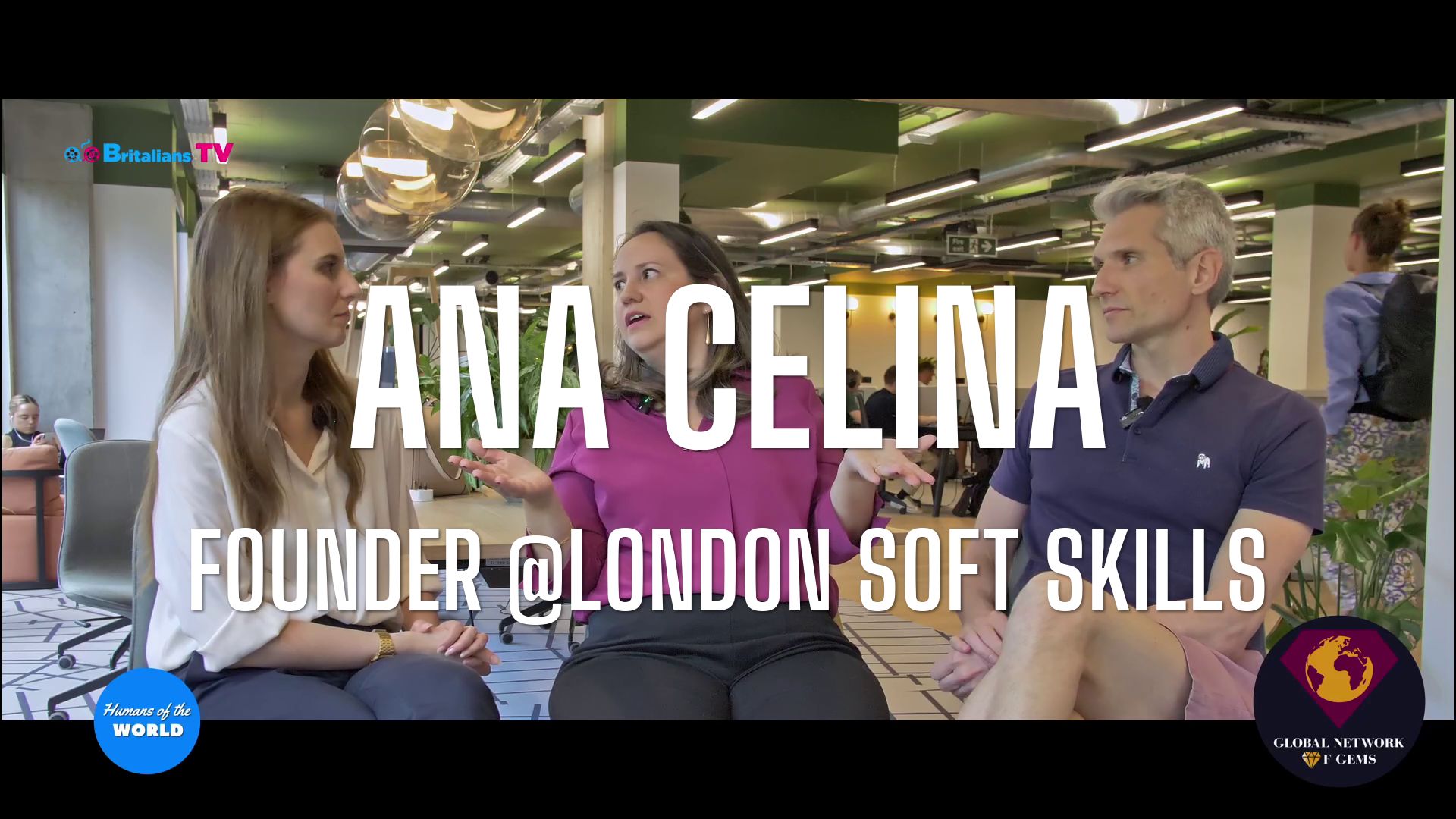
“Life Is Too Short to Be Shy”: How One Brazilian Immigrant’s Journey From Cancer Survivor to Soft Skills Entrepreneur Reveals London’s Hidden Loneliness Epidemic
21 February 2022
“You cannot change the past, but only you can change the future!”
16 January 2025
“I Wanted to Help People”: Deputy Supervisor Rick Marsh of Tuxedo, the Gem of New York, on Humans of the World with Marco and Erica
30 November 2021
“Il cielo è il limite e tu sai che puoi avere / Quello che vuoi, sii quello che vuoi”.
31 August 2021
“SIAMO TUTTI SULLA STESSA MUCCA”
30 July 2021
“Tu non puoi cambiare il passato, ma tu solo puoi cambiare il futuro!” Primo piano di aspirazioni e obiettivi del fotografo Arnt Eriksen.
2 July 2021
#TRUELIFE: Marco and Erica spotted at DAM Health Covid-19 Test centre
2 July 2021
#TRUELIFE: Marco ed Erica di nuovo in viaggio!

24 December 2021
61 Motivi per Trasferirti all’Estero
24 December 2021
61 Reasons Why You Should Move Abroad
8 November 2021
A Britalian in Rome: the actress Jane Alexander
16 July 2021
A caccia di aurore boreali
29 January 2023
A Chocolate Extravaganza In Vermont- Humans of the World third Season Flies Across The Pond
15 November 2024
A Conversation with Dr. Markus Naser: The Unlikely Mayor of Rothenburg ob der Tauber
15 November 2024
A Day in the Life of Oliver Gußmann: Rothenburg's Tourist Pastor
15 November 2024
A Glimpse into the Life of Laura: Embracing Family, Theater, and Cultural Diversity
23 July 2021
A journey into the atelier of Cipessa Prin
6 July 2022
A Miniature Artist Explains to Marco and Erica How to Put Things into Perspective
17 January 2022
A talent in… Nashville!