
Beyond the Rooftop: How UCL’s Solar Research Could Change London’s Buildings and Energy Future
2026-04-27 04:02 - By Marco Biagioli
Beyond the Rooftop: How UCL’s Solar Research Could Change London’s Buildings and Energy Future
By Marco Biagioli
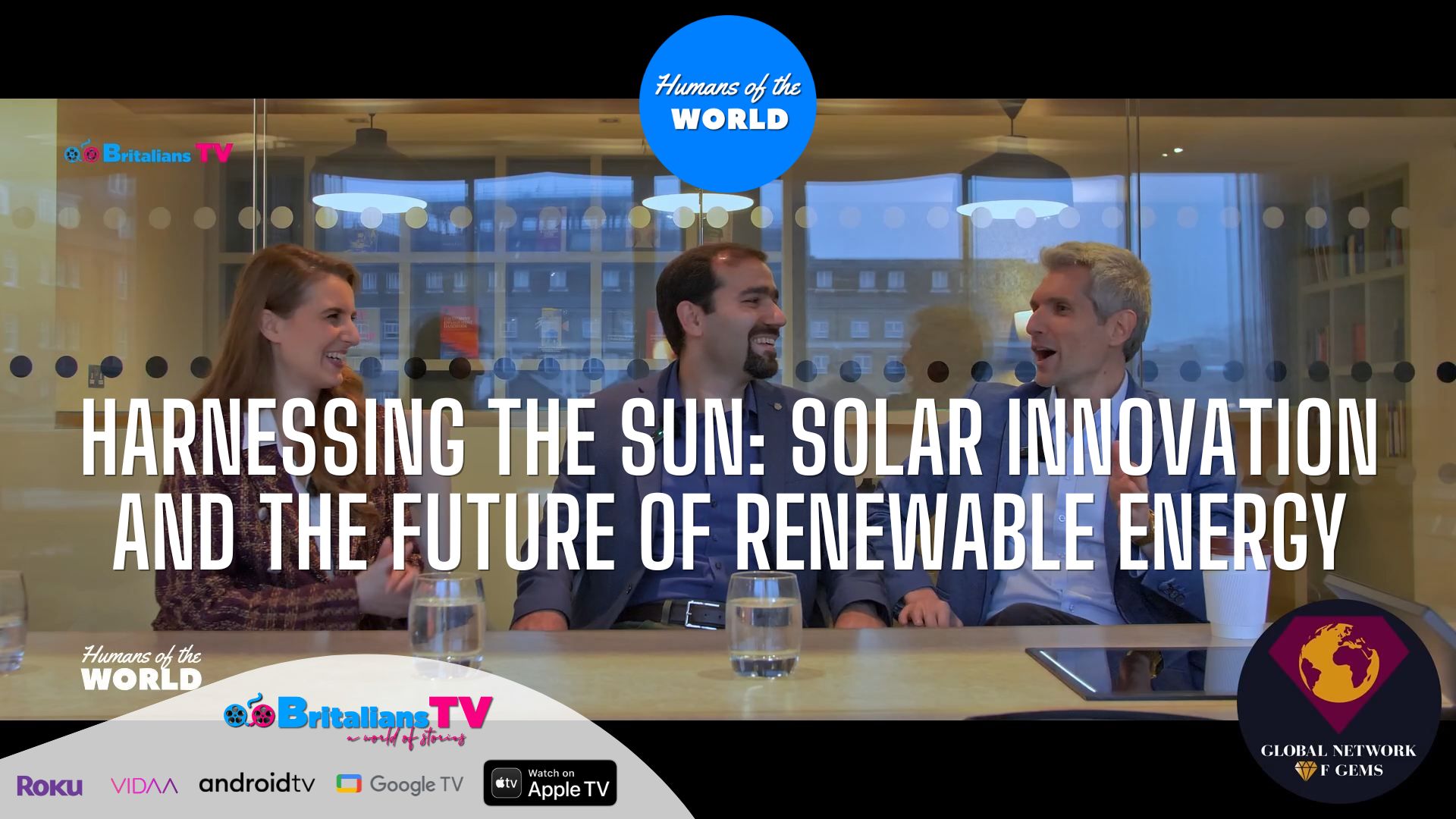
When Erica Melargo and I had coffee in the shadow of University College London’s bustling campus, we sat down with Dr. Mojtaba Abdi-Jalebi, a material scientist at UCL’s Institute for Materials Discovery. What began with the unveiling of a small, dark solar panel quickly expanded into a wider examination of how next-generation photovoltaics could reshape urban infrastructure, industrial decarbonisation and energy access. Our discussion revealed not just the promise of a technology, but also the engineering hurdles, policy questions, and human considerations that will determine if lab breakthroughs can truly translate into community-wide impact.
Below, I’ve unpacked key themes from our conversation against current data and research to show why this shift matters right now—it’s a critical global turning point for us in London.
The Physics of a Quiet Grid Shift
Professor Abdijalevi’s group specialises in tandem solar cells that stack two distinct materials: conventional silicon on the bottom element, and a relatively new compound called perovskite on top. It’s an ingenious combination; silicon excels at capturing lower-energy light wavelengths, while perovskite absorbs higher-energy ones. Together, they dramatically widen the spectrum of sunlight converted into electricity.
In laboratory settings, these tandem configurations have surpassed 34% efficiency, pulling far ahead of standard silicon panels that typically hover around 20–22%. This represents more than incremental progress; it directly addresses one of renewable energy’s oldest bottlenecks: fitting maximum output onto limited surface area. The UK currently draws roughly 5% of its total energy from solar—and although renewables have recently crossed the 50% threshold for electricity generation nationwide (according to National Grid ESO data), that gap remains significant. As our cities densify and rooftop space gets contested, achieving higher efficiency per square metre transitions from a scientific desire to an absolute spatial necessity for us in London.
Erica noted during the demonstration how easily the panel caught ambient indoor light. That was no accident rooted in chemistry. Perovskite-based cells can harvest diffuse and artificial illumination at 40–45% conversion efficiency under standard LED or fluorescent lighting, making them vastly superior indoors to silicon. For Londoners juggling power-hungry devices in shadowed courtyards—or even just windowless studios—this shifts photovoltaics from being merely weather-dependent infrastructure to a form of ambient energy harvesting we can actually utilize.
When Buildings Become Power Plants
Our conversation inevitably moved toward integration. I asked, “Can you practically cover an entire car with this?” The answer pointed us straight toward Building-Integrated Photovoltaics (BIPV), a sector that is rapidly gaining serious traction across European urban renewal plans. Unlike traditional panels that desperately require direct, perpendicular sunlight, newer perovskite and organic photovoltaic variants function remarkably well on vertical façades, south-facing windows, or even interior partitions where light bounces rather than just striking directly.
Architects in London and Manchester are already experimenting with semi-transparent solar glass that replaces conventional glazing without sacrificing daylight or style. Professor Abdijalevi stressed a detail I found fascinating: the colour-tunability allows these panels to match brickwork, façade cladding, or even local public art installations, thereby removing the visual friction that has historically slowed residential adoption rates for us.
However, integration is tricky. Scaling perovskite from lab-sized squares to entire building modules demands flawless material deposition over massive areas. Misaligned microscopic defects multiply at scale, dragging down uniformity and efficiency dramatically. Manufacturing partners are trying to solve this with turnkey production lines to standardize coating thickness and sealant integrity. While I understand that independent life cycle assessments suggest perovskite promises lower embodied carbon than silicon, commercial viability truly hinges on closing this scale-to-performance gap without causing an unpredictable inflation in the overall system costs.
For London, where many buildings face pressure to reduce emissions while preserving historic character, the challenge is particularly significant. Retrofitting Victorian terraces, public buildings and dense apartment blocks requires technologies that can generate energy without changing the appearance or function of existing neighbourhoods.
Testing the Technology: Durability, Safety and Recycling Challenges
No technology becomes widely adopted without intense scrutiny. Dr. Mojtaba Abdi-Jalebi was refreshingly candid: current lifespan projections for perovskite-based solar technologies remain shorter than the two- or three-decade performance windows typically required for large municipal procurement. Field trials are underway across Europe, but long-term degradation data under thermal cycling, UV exposure and changing weather conditions remains one of the key questions researchers are working to answer.
As solar technology becomes increasingly integrated into buildings, everyday objects and urban infrastructure, researchers stress the importance of rigorous testing, independent certification and transparent safety standards before large-scale deployment. Dr. Mojtaba Abdi-Jalebi explained that photovoltaic modules must meet established requirements for electrical safety, durability and fire performance, with international certification frameworks providing essential safeguards for future applications.
The challenge is therefore not simply improving efficiency, but ensuring that next-generation solar materials can perform reliably over time in real-world environments, including homes, workplaces and public spaces across cities such as London.
Finally, recyclability remains another major hurdle. While conventional silicon panels benefit from established recovery networks, perovskite’s newer chemical structures require dedicated end-of-life solutions. Pilot programmes across Europe are exploring methods to recover valuable materials such as silver electrodes and glass substrates while minimising environmental impact. As these technologies move closer to commercial use, community-level recycling policies and infrastructure will need to evolve alongside the innovation itself.
Closing the Carbon Loop
Perhaps the most ambitious scientific thread that caught my attention was solar-powered electrochemical conversion. Dr. Mojtaba Abdi-Jalebi’s group is coupling photovoltaic arrays with liquid-phase reactors that can split water and convert captured CO₂ into valuable chemicals like methanol, ethanol, and ethylene. These molecules act as drop-in fuels for shipping, petrochemistry, and heavy transport, essentially turning waste carbon into storable energy carriers for us.
I imagine a pilot line near Rome, partnered with a high-emission steel producer, to test this system under genuine industrial conditions. If scaled successfully, this approach promises alignment with both the EU’s Net-Zero Industry Act and the UK’s Industrial Strategy for decarbonising hard-to-abate sectors. Initial life-cycle analysis shows potential for negative carbon footprints when renewable electricity powers the reactors and CO₂ is sourced directly from flue gas or direct air capture units.
However, I must admit that this chemistry still feels unforgiving. The electrodes have to withstand highly acidic environments while facilitating rapid charge transfer without corroding—material degradation under continuous operation remains a primary research focus for me personally. Independent reviewing bodies constantly point out that while lab-scale CO₂-to-fuel conversion is exciting, tackling the thermodynamic efficiency and catalyst longevity at commercial throughput remain major unsolved problems. Bridging this gap demands sustained public funding, cross-institutional data sharing, and regulatory sandboxes that allow us controlled real-world testing without premature market disruption.
For London, these technologies could eventually influence industries that are difficult to decarbonise, including construction, transport and manufacturing supply chains connected to the capital.
Democratizing Light
Throughout the interview, for us, accessibility surfaced as a moral imperative – not just an engineering target. Globally, roughly 800 million people still lack grid electricity (according to UN Energy figures). Even when some connections exist, supply remains incredibly intermittent. Dr. Mojtaba Abdi-Jalebi recalled that photovoltaic costs have plummeted from hundreds of dollars per watt in the 1970s to mere fractions of a dollar today, driven by manufacturing scale and policy incentives.
Perovskite’s low-temperature processing could further compress production costs, potentially enabling off-grid microgenerators for clinics, schools, and informal settlements right here in London. When I asked if widespread adoption was decades away, he pointed toward 2050 net-zero targets as a realistic horizon—but only if we see continued R&D investment, supply chain maturation, and cross-border knowledge transfer.
His own journey from Iran to Switzerland and then to London mirrors the global talent pipelines that fuel European research hubs. As Erica highlighted for me, these conversations only matter when they translate into tangible community resilience: reliable microgrids for flood-prone neighbourhoods, lower energy bills for working families here, and sustainable retrofits for our historic Victorian terraces and modern post-war estates.
What’s Next for London’s Energy Landscape
Dr. Mojtaba Abdi-Jalebi’s lab work perfectly illustrates a broader transition: photovoltaics are no longer confined to rural solar farms or suburban roofs; they are becoming architectural materials, wearable infrastructure, and core industrial decarbonisation tools in my view. Yet the journey from demonstration to real-world deployment demands rigorous field testing, transparent lifecycle accounting, and proactive public engagement on health, recycling, and grid integration across Greater London.
Local councils, university spin-outs, and energy cooperatives are already piloting BIPV retrofits and community microgrids here. As independent researchers warn, success won’t be measured in laboratory efficiency records alone; it must be measured by how well these systems adapt to Britain’s unique weather patterns, building codes, and deep socioeconomic divides.
That coffee conversation was just the beginning for us. The real story is whether the materials born inside UCL’s clean rooms can genuinely withstand the damp and the dust, the relentless deadlines, and the democratic expectations of everyday life in London. We plan to keep tracking this data – interviewing engineers, planners, and residents – and reporting how science finally becomes street-level reality for us. Because the future of energy will not be measured only in laboratory efficiency records, but in whether communities can access cleaner, more affordable and more resilient power.
Written by
Marco Biagioli
Episodes in this Article

London ► S12 E7
Harnessing the Sun: Solar Innovation and the Future of Renewable Energy
In this Article

Global Network of Gems
Featuring


Marco Biagioli
Actor and TV Presenter


Erica Melargo
Actor and TV Presenter
In this Article





News

10 December 2021
“I sent my Résumé to NASA every week for a year”: Meet Aerospace Engineer Thomas Ivanco
2026-03-25 08:41:20
“Life Is Too Short to Be Shy”: How One Brazilian Immigrant’s Journey From Cancer Survivor to Soft Skills Entrepreneur Reveals London’s Hidden Loneliness Epidemic

21 February 2022
“You cannot change the past, but only you can change the future!”

16 January 2025
“I Wanted to Help People”: Deputy Supervisor Rick Marsh of Tuxedo, the Gem of New York, on Humans of the World with Marco and Erica

30 November 2021
“Il cielo è il limite e tu sai che puoi avere / Quello che vuoi, sii quello che vuoi”.

31 August 2021
“SIAMO TUTTI SULLA STESSA MUCCA”

30 July 2021
“Tu non puoi cambiare il passato, ma tu solo puoi cambiare il futuro!” Primo piano di aspirazioni e obiettivi del fotografo Arnt Eriksen.

2 July 2021
#TRUELIFE: Marco and Erica spotted at DAM Health Covid-19 Test centre

2 July 2021
#TRUELIFE: Marco ed Erica di nuovo in viaggio!

24 December 2021
61 Motivi per Trasferirti all’Estero
24 December 2021
61 Reasons Why You Should Move Abroad

8 November 2021
A Britalian in Rome: the actress Jane Alexander

16 July 2021
A caccia di aurore boreali

29 January 2023
A Chocolate Extravaganza In Vermont- Humans of the World third Season Flies Across The Pond

15 November 2024
A Conversation with Dr. Markus Naser: The Unlikely Mayor of Rothenburg ob der Tauber
15 November 2024
A Day in the Life of Oliver Gußmann: Rothenburg's Tourist Pastor

15 November 2024
A Glimpse into the Life of Laura: Embracing Family, Theater, and Cultural Diversity

23 July 2021
A journey into the atelier of Cipessa Prin

6 July 2022
A Miniature Artist Explains to Marco and Erica How to Put Things into Perspective

17 January 2022
A talent in… Nashville!