
From guilt to grassroots: How London environmental storytellers are changing the climate conversation
2026-06-25 01:22 - By Marco Biagioli
From guilt to grassroots: How London environmental storytellers are changing the climate conversation
By Marco Biagioli | London
Across London, conversations about climate change are increasingly moving beyond protests and policy debates into neighbourhoods, schools and community spaces. A new generation of environmental storytellers is exploring a different approach: making it fun to care about the planet, making climate issues easier to understand, more accessible and less divisive.
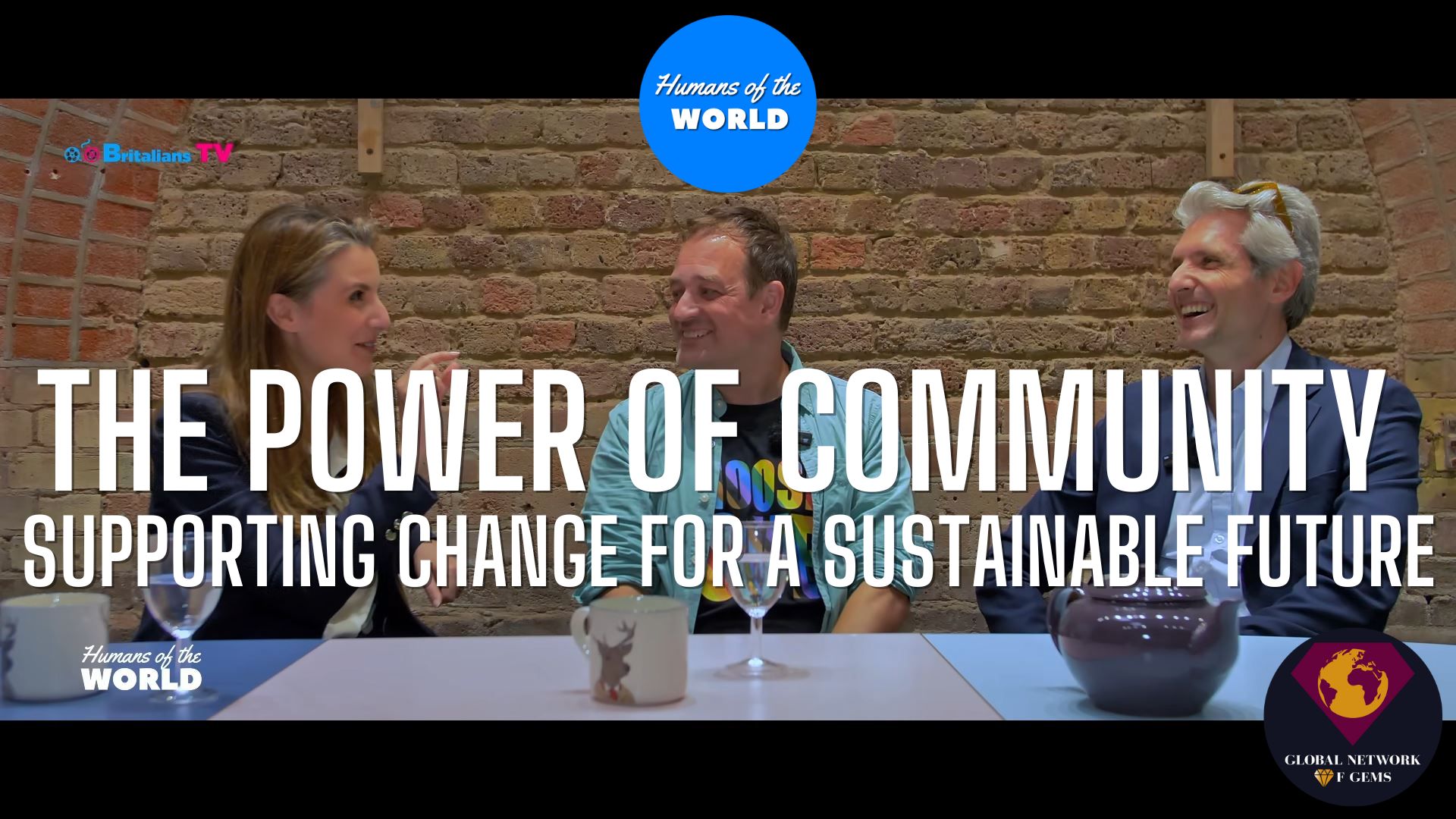
At the centre of this approach is Paul Goodenough, an Emmy-nominated environmental storyteller whose London-based work through “Rewriting Earth” uses comics, films, board games and digital projects to explore how environmental issues can reach wider audiences. His latest short film, Saving Jane, featuring primatologist Jane Goodall and a specially recorded version of Peter Gabriel’s 1980s song “Red Rain,” has reached an estimated 54 million people across social media platforms – entirely organically, without paid advertising.
The numbers reflect something deeper: a growing recognition that the way environmentalism is sold matters as much as the science behind it.
Why climate messages can struggle to reach every community
Goodenough’s approach wasn’t always this way. When asked how his work has evolved since early interviews with Britalians TV, he describes a fundamental pivot away from asking individuals who are already struggling to bear responsibility for global problems.
“I think about an Amazon driver who may have done a 10-hour shift,” Goodenough explains. “They haven’t got time to go to the toilet, they’ve been peeing into bottles in their van. That person comes back to a household with no family, no animals. Can you say to that person, ‘You need to change your life to save the planet’? That’s not fair.”
This sentiment resonates beyond the environmental community. Sociologists have long recognised what Goodenough calls the “space problem”: the more fortunate you are, the more mental bandwidth you have for global issues. Those struggling to afford a birthday card and cake are thinking narrowly because their world has become urgent in smaller ways. The phenomenon is not unique to environmentalism but reflects broader patterns of privilege and cognitive capacity documented across public health literature.
Goodenough makes no claim to have this answer. “I’m a fat guy from Wiltshire who writes stories,” he says. “Probably above me.” But it’s precisely that humility – combined with professional craft – that has reshaped his approach entirely. Three years into Rewriting Earth, he shifted focus.
“I found that the one thing people could agree on was animals,” he explains. “If you talk about climate, carbon, food systems, social justice – everyone gets a bit of resistance. But if I start with animals, that’s my focus point.”
From personal indifference to public storytelling
Goodenough’s own path wasn’t linear. He is candid about having been indifferent as a young man from a working-class background. “I absolutely didn’t care when I was young. I didn’t recycle. I ate loads of meat. I’d happily buy the fastest, biggest, least efficient car I could if I could.”
The turning point was small and unexpected: butterflies. Or rather, the absence of them.
Noticing a decline in butterfly populations around his home, he did something simple – replacing a traditional lawn with clover to avoid mowing, what he calls “a lazy, selfish thing.” The result brought an unanticipated reward. Walking through clover thick with moths and butterflies, he says, gave him a moment of internal joy he didn’t know he’d get. Hedgehogs, near-extinct birds, newts, frogs — his garden has since become a self-sustaining ecosystem.
“The message,” he says, “is just leave some dirt alone, and life will find a way.”
The experience is replicable in principle but rarely at scale. Urban balconies, small gardens, neglected corners – opportunities exist across all neighbourhoods. In London, where residents live alongside major transport networks, dense housing and some of the UK’s highest population pressures, questions around biodiversity, green spaces and climate adaptation increasingly affect everyday community life.
Why some communities feel disconnected from climate messaging
Goodenough identifies a structural flaw in modern environmentalism: superiority culture. “You’ve got a lot of people saying, ‘I’m better than you because I do all these wonderful things. You should be like me.’ For a lot of us, that really turns us off.”
The dynamic excludes renters who can’t install renewables, those with food intolerances who can’t go vegan, and anyone who simply feels lectured. Research in behaviour change consistently shows that shaming is counterproductive – a finding Goodenough echoes through example: people don’t respond when told they should dye their hair differently by someone else’s standards. They push away.
His solution is targeting. Rather than asking what message will reach everyone, his strategy asks: how do I speak to heavy-metal fans? To makeup and fashion audiences? The answer has been specificity. One project targets grassroots sports – the argument being that if unchecked climate change erodes riverbanks and floods fields, local teams (not just Premiership clubs) will go underwater. School-run routes across bridges that wash away turn a 10-minute journey into 45 minutes of traffic. “Suddenly, that’s real,” Goodenough says.
The approach strips out data-heavy presentations. While facts inform the work, they’re wrapped in stories from people whose lives mirror the audience. For those who didn’t do well at school, numbers are off-putting. Narrative is not.
Rewilding and de-extinction: Science beyond spectacle
Part of this storytelling involves concepts many haven’t encountered: rewilding and, more controversially, de-extinction – bringing back extinct species because ecosystems genuinely need them.
Goodenough makes clear these are not Jurassic Park fantasies but carefully vetted ecological projects. The company Colossal is working on woolly mammoths and thylacines (Tasmanian tigers), with approvals from government chief scientific officers. At present, bioengineering regulations require special dispensation to grow an animal from test tubes – and any organism kept alive may only survive 150 days before being put down.
The rationale for each species is functional:
- Woolly mammoths in the Arctic have teeth strong enough to break seeds that elephants can’t, enabling tundra reforestation. Simultaneously, decoding their genome helps solve disease problems facing modern elephant populations.
- Tasmanian devils (a relative of the thylacine) once lived across eastern Australia making burrows that pushed organic detritus underground, dramatically reducing wildfire fuel. Their absence left carrion decomposing unchecked, spreading disease through healthy animal populations. Reintroducing even 3,000 of them significantly reduces fire severity and spread.
- Beavers, reintroduced to parts of West London and beyond, manage water systems naturally — something that drew a laugh in conversation but represents legitimate habitat restoration.
The science matters, but so does the knowledge gap surrounding it. As our conversation with Paul revealed, many environmental concepts remain unfamiliar to the wider public. Making this information accessible and understandable is itself an important part of building informed communities.
A parallel lesson from indigenous agriculture
The conversation turns to food systems and native American agricultural practices now receiving scientific validation. Bison hoof movement, rather than traditional mechanical tilling, breaks ground in ways that make seeds more likely to flourish while preserving soil carbon. Monoculture crop fields — say, a field of only corn — risk total loss when pests arrive; diversified plots attract entire ecosystems where birds control pest populations naturally and a bumper or failure in one crop doesn’t bankrupt the farmer.
“Native people have so much knowledge that science is now catching up to,” Goodenough says. “They’ve been telling us for generations.”
The lesson connects broader themes of cultural diversity and cross-pollination. The same logic of mixing backgrounds, ideas, and practices strengthens human communities as it does ecosystems.
How national environmental policy affects local communities
Goodenough’s discussion also touched on how national environmental decisions influence local communities. Changes in energy policy, renewable infrastructure and environmental regulation can have direct consequences for residents, businesses and local authorities.
National environmental policy changes increasingly shape decisions made at a local level. Recent changes to renewable energy planning have made it easier for communities and developers to explore new wind and clean energy projects, while ongoing reviews of fossil fuel licensing and wildlife protections continue to influence how councils, landowners and residents approach the transition towards a lower-carbon future. For local communities, these decisions extend beyond national headlines: they affect opportunities for renewable investment, the protection of local environments and the way towns and rural areas adapt to changing economic and environmental pressures.
The argument for collective action, not individual guilt
Perhaps the most consistent thread running through Goodenough’s work is a shift from personal responsibility toward collective voice. Referencing Black Lives Matter as a model: millions of people not directly affected by systemic racism raised their voices anyway, sending an unmistakable signal to governments, businesses, and institutions that “enough is enough.”
Jane Goodall offers an illustration through story. While speaking with factory owners in Hebei, China, she met one who was proud of the environmental changes he’d implemented – until his daughter entered the room crying. At school, other children had accused her father of destroying the planet and killing animals. “Is it true?” Confronted by what mattered to his daughter rather than spreadsheets or efficiency targets, the owner’s entire mindset shifted overnight, transforming his whole company.
“If we start hearing from our friends, our parents, our football teammates, our netball coaches that they care, suddenly we all care,” Goodenough says. “That’s really powerful.”
The message to ordinary people isn’t to live perfectly green lives. It’s to lend their voice – supporting those already putting themselves at risk for the planet sends a clear signal down the chain to where power actually sits.
Not everyone comes along – and that’s okay
Goodenough’s family, while supportive of him personally, leads normal lives far removed from environmental work. They don’t recycle. They drive large petrol vehicles and burn plastic in garden bins. The gulf between his professional life and theirs remains wide.
“That’s one of the beauties of my family,” he says. “They’re very normal. I’m probably not as normal.” That gap helps him understand everyday pressures for people who aren’t him. Family transitions take time – whether environmental, dietary, or behavioural. You can’t force someone to change their hair colour; you certainly can’t force them to change their life philosophy. Give the information. Wait. Trust that a moment will come when they’re ready.
He offers a gym analogy: you don’t ask a first-time visitor to lift 100 kilograms. You start with the treadmill, then build up. “Find your speed. Find the thing you think you can do comfortably and let’s start there.”
Why this matters now
The conversation reveals an environmental movement at a crossroads. One path is preachily individualistic – demanding personal sacrifice in ways that alienate precisely the communities most capable of creating collective change. The other is narrative, inclusive, and strategic about where pressure actually works: with governments, businesses, and institutions that respond to public sentiment more than they do personal conscience.
Goodenough doesn’t ask people to feel guilty for driving petrol cars or eating meat. He asks them to support the activists who are putting themselves on the line – and to understand that their voice matters precisely because it’s collective rather than individual. The Amazon driver peeing into bottles doesn’t need to save the planet. But millions of ordinary people saying “we don’t want to live on a dead planet” does.
The short film Saving Jane is running across YouTube and Instagram under @PaulGoodenough or @RewritingEarth – accompanied, as Goodenough promises, by Peter Gabriel’s hauntingly beautiful 40-year song given new recording for the first time since the track aired on BBC’s Old Grey Whistle Test.
The story being told isn’t that climate apocalypse is inevitable. It’s that ordinary people – starting from wherever they are – can become part of a groundswell powerful enough to change everything, without having to be perfect along the way.
As Goodenough’s approach suggests, effective climate communication may depend not only on scientific information, but on whether people feel represented, involved and able to contribute.
Written by
Marco Biagioli
Episodes in this Article

London ► S12 E1
The Power of Community: Supporting Change for a Sustainable Future
In this Article

Global Network of Gems
In this Article




News
10 December 2021
“I sent my Résumé to NASA every week for a year”: Meet Aerospace Engineer Thomas Ivanco
2026-03-25 08:41:20
“Life Is Too Short to Be Shy”: How One Brazilian Immigrant’s Journey From Cancer Survivor to Soft Skills Entrepreneur Reveals London’s Hidden Loneliness Epidemic
21 February 2022
“You cannot change the past, but only you can change the future!”
16 January 2025
“I Wanted to Help People”: Deputy Supervisor Rick Marsh of Tuxedo, the Gem of New York, on Humans of the World with Marco and Erica

30 November 2021
“Il cielo è il limite e tu sai che puoi avere / Quello che vuoi, sii quello che vuoi”.
31 August 2021
“SIAMO TUTTI SULLA STESSA MUCCA”
30 July 2021
“Tu non puoi cambiare il passato, ma tu solo puoi cambiare il futuro!” Primo piano di aspirazioni e obiettivi del fotografo Arnt Eriksen.
2 July 2021
#TRUELIFE: Marco and Erica spotted at DAM Health Covid-19 Test centre
2 July 2021
#TRUELIFE: Marco ed Erica di nuovo in viaggio!

24 December 2021
61 Motivi per Trasferirti all’Estero
24 December 2021
61 Reasons Why You Should Move Abroad
8 November 2021
A Britalian in Rome: the actress Jane Alexander
16 July 2021
A caccia di aurore boreali
29 January 2023
A Chocolate Extravaganza In Vermont- Humans of the World third Season Flies Across The Pond
15 November 2024
A Conversation with Dr. Markus Naser: The Unlikely Mayor of Rothenburg ob der Tauber
15 November 2024
A Day in the Life of Oliver Gußmann: Rothenburg's Tourist Pastor
15 November 2024
A Glimpse into the Life of Laura: Embracing Family, Theater, and Cultural Diversity
23 July 2021
A journey into the atelier of Cipessa Prin
6 July 2022
A Miniature Artist Explains to Marco and Erica How to Put Things into Perspective
17 January 2022
A talent in… Nashville!