
One Graduate’s Uncertainty Mirrors Ireland’s Youth at a Crossroads
2025-12-04 10:17 - By Erica Melargo
One Graduate’s Uncertainty Mirrors Ireland’s Youth at a Crossroads
A conversation on Biralians TV opens a window into broader questions about post-pandemic transitions, global mobility, shifting childhoods, and the economic realities shaping a generation.
By Erica Melargo (Britalians TV)
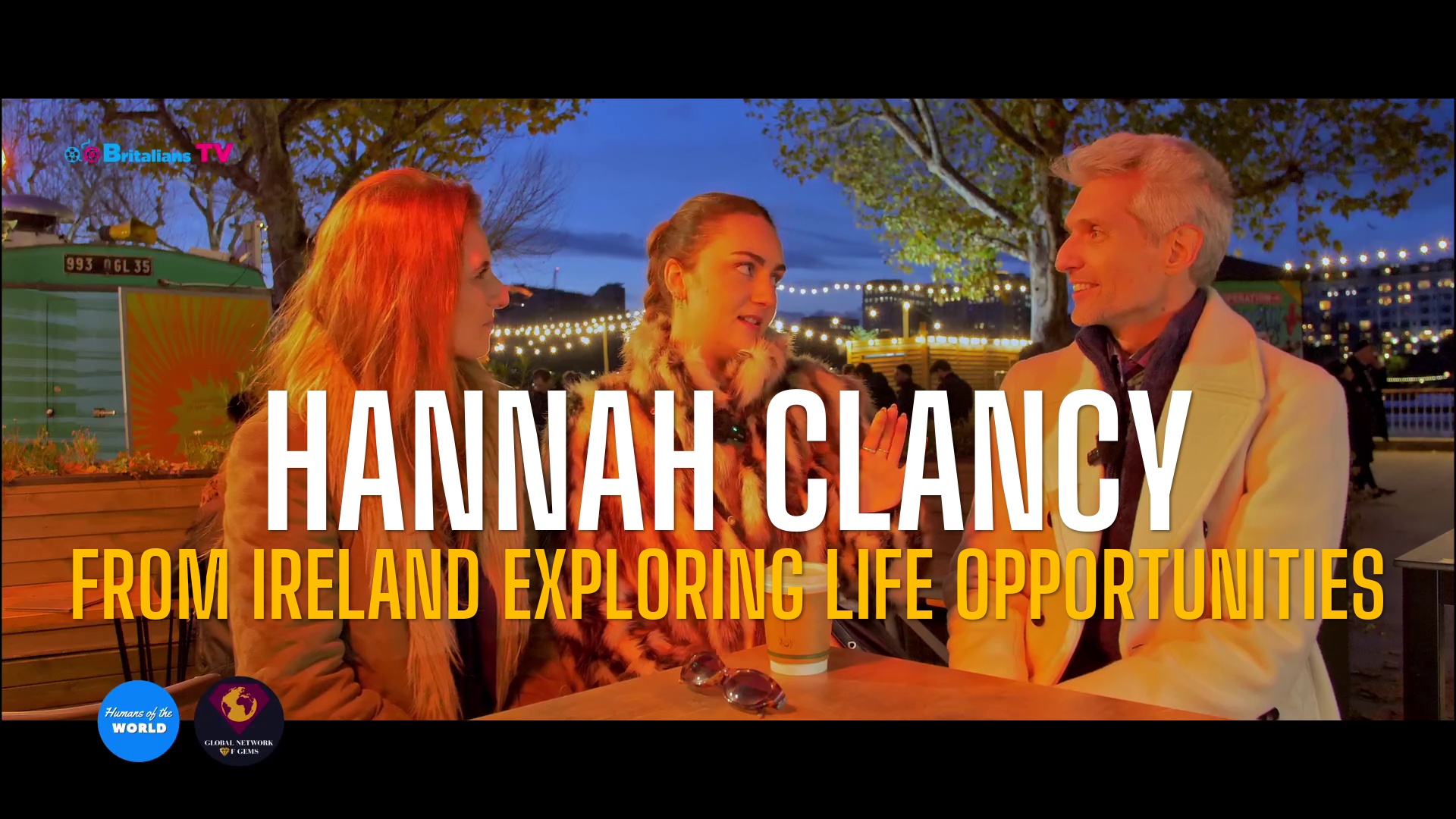
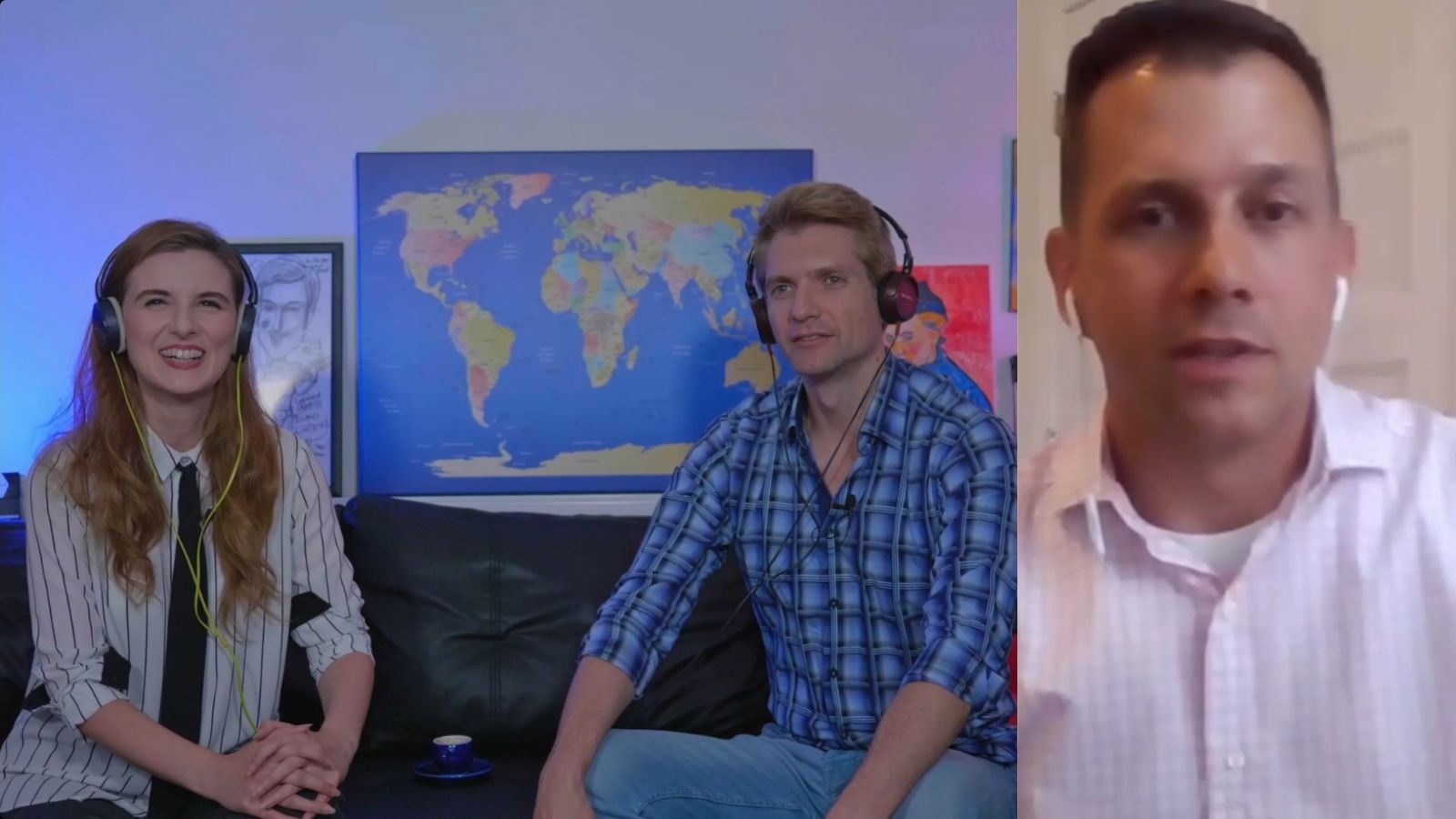
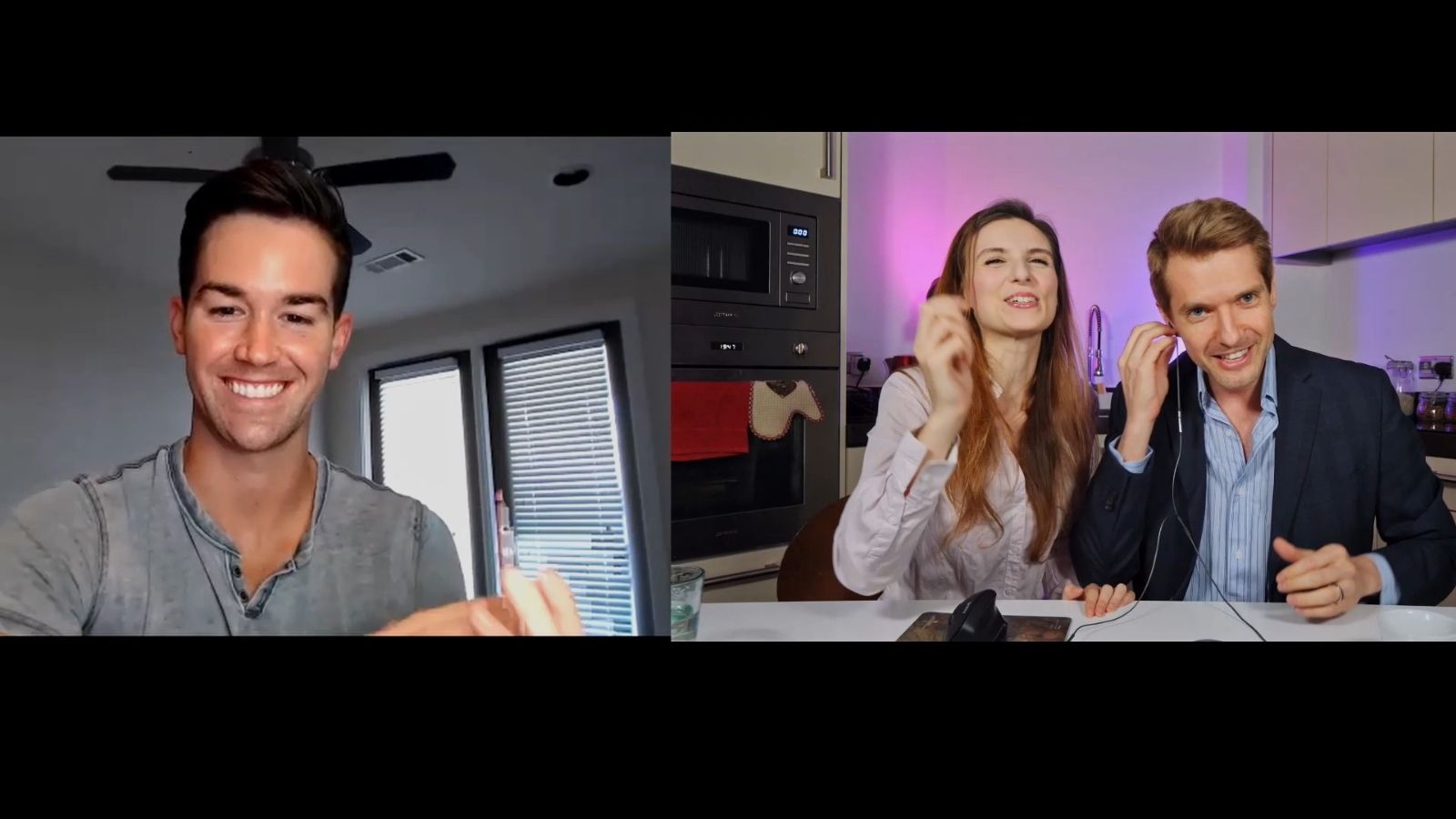
GALWAY/LONDON — When Marco Biagioli and Erica Melargo sat down with Claire, a 22-year-old recently graduated from university, the conversation began where Biralians TV always does: in the quiet space between sentences. She was visiting her sister in London for their mother’s birthday, working in a bar while living in Galway, and openly navigating the limbo that follows graduation. “I’m content, but I don’t really know what I’m gonna do after,” she said. “Nobody knows.”
That admission is no longer an outlier. It prompts me to think that interviews provide the foundation for my journalism, but they are never the finished story. What emerges from conversations like Claire’s requires context, verification, and community grounding. When we trace her words through public data, educational research, and economic reports, a clearer picture forms: young Irish adults are negotiating unprecedented financial pressure, redefining what “success” looks like, and adapting to a childhood landscape fundamentally altered by technology—all while maintaining deep ties to family and place.
The Post-Grad Pause and the Pull of Global Mobility
Claire’s degree is in children’s studies, a broad field that opens pathways to teaching, youth work, or early years education. Yet like many peers, she has landed in hospitality while figuring out next steps. Her plans include a summer trip to Vietnam followed by a potential move to Australia, contingent on visas, savings, and timing. “You kind of need the money and then you need to do it and book it,” she noted, echoing a reality faced by thousands of young Irish people.
Central Statistics Office (CSO) figures consistently show that youth underemployment remains stubbornly high, with graduates increasingly taking temporary or service-sector roles while planning longer-term careers. Post-pandemic travel trends have intensified the desire for geographic flexibility, but economic barriers persist. Australian Working Holiday visas alone can cost over €2,000 including health insurance and upfront accommodation, while exchange rate volatility—something Claire humorously referenced when juggling euros and pounds—adds cognitive load to everyday financial decisions.
“You’re not just saving for a deposit anymore; you’re saving for permission to leave,” explains Dr. Aoife O’Sullivan, an independent researcher on youth migration at the National University of Ireland, Galway. “That’s a shift in how we understand mobility. It’s no longer purely aspirational; it’s administratively and financially gated.”
Marco Biagioli gently prompted me to reflect on this tension between spontaneity and structure, noting how many young adults express freedom as “just going with the flow” while quietly navigating complex bureaucratic and economic landscapes. I suggest that the challenge is not a lack of ambition among Ireland’s youth—but rather a mismatch between opportunity rhetoric and accessible pathways.
Family Roots in an Age of Movement
Claire’s story is deeply familial. Born in London to parents who met there, she was raised in Southwest Ireland as one of five children, with a close bond to her sister Grace and younger half-siblings from her father’s previous relationship. “We’re so close I wouldn’t even think twice about it,” she said. This blended, multigenerational warmth mirrors a quiet shift in Irish family structures: co-parenting arrangements, stepfamilies, and non-traditional kinship networks are increasingly normalized, yet still rarely discussed in public policy frameworks designed around nuclear models.
Sociologists note that strong local ties don’t necessarily anchor youth to one place; they often enable it. The Irish diaspora has long functioned as an informal safety net, with friends and family providing housing referrals, emotional support, and cultural continuity abroad. When Claire remarked on how easily she connects with fellow Irish people overseas—“It’s funny, it’s like home”—she highlighted a phenomenon documented by the Global Irish Economic Forum: diaspora networks are now digital, decentralized, and highly responsive to youth migration patterns.
Yet this mobility comes at a local cost. Galway and other regional hubs continue to experience youth outmigration, straining community demographics while simultaneously gaining remittances, cultural exchange, and eventual return migration. During the interview, I guided the conversation toward this paradox, asking whether leaving is loss or investment. The answer, which the research suggests, is both. Towns like Galway are responding with youth housing task forces, graduate retention grants, and creative economy incubators designed to make staying viable without penalizing those who leave.
Childhood in a Screen-Saturated Generation
Claire’s academic focus landed naturally on her greatest concern: how children are growing up today. She expressed a clear preference for working with seven- and eight-year-olds—an age when personality emerges but critical thinking is still malleable—and voiced unease about constant digital exposure. “Everything is different now,” she said. “They can watch anything, scroll for hours. It’s a bad thing in that age bracket.”
Her intuition aligns with developmental research. UNICEF Ireland’s 2023 State of the Family report warns that prolonged screen time before age nine correlates with reduced attention spans, disrupted sleep patterns, and diminished face-to-face social practice. Educational psychologists emphasize that while technology offers unprecedented access to information, it often bypasses the scaffolding needed for emotional regulation and peer negotiation.
“We’re seeing a generational handoff where parents are navigating tools they never mastered in childhood,” says Dr. Liam Brennan, an educational psychologist with the Irish Psychological Society. “Children aren’t just consuming content; they’re internalizing algorithmic pacing. That changes how they learn patience, conflict resolution, and self-soothing.”
The conversation naturally turned to Claire’s own upbringing: a large, socially active family where her mother—one of eight siblings herself—relied on community rather than devices for stimulation and discipline. That contrast isn’t merely nostalgic; it points to a structural gap in Ireland’s early years framework. While the Department of Education has rolled out digital literacy modules for schools, there is limited nationwide support for caregivers managing screen-time boundaries. Biralians TV’s subsequent outreach to local Galway parent groups and youth centers revealed a growing demand for community-based workshops that blend developmental psychology with practical digital hygiene—a need policymakers are only beginning to address.
The Economics of “Just Being”
Claire readily admitted she leans toward spending over saving, prioritizing experiences, travel, and social connection. “I’m more creative with money,” she said, acknowledging the friction between her habits and conventional financial advice. This tension reflects a broader generational recalibration: Gen Z increasingly values experiential wealth, mental well-being, and flexibility over traditional asset accumulation.
But idealism meets inflation. The Republic of Ireland has recorded some of Europe’s highest consumer price increases in recent years, with rent in cities like Galway outpacing wage growth for entry-level graduates. Financial literacy initiatives, such as those led by the Money Advice and Budgeting Service (MABS), report rising inquiries from young adults struggling to balance discretionary spending with emergency savings. “We’re not teaching budgeting in a vacuum anymore,” notes MABS regional advisor Niamh Corrigan. “We’re helping them navigate gig economy instability, delayed career starts, and housing insecurity while still wanting to live meaningfully.”
Marco Biagioli’s gentle probing around financial planning versus present-moment living revealed a deeper question: how do communities support youth who reject linear career trajectories without abandoning them to precarity? Responses are emerging. Local credit unions in the West have introduced micro-savings accounts tailored to travel or education goals, while graduate transition programs in Galway University partnering with local employers emphasize flexible upskilling rather than rigid credentialing.
A Conversation That Continues Outside the Frame
Biralians TV does not treat personal narratives as endpoints. Claire’s reflections on uncertainty, family loyalty, childhood development, and financial navigation are data points in a larger community story. When Erica Melargo asked her what she looks for in relationships—“Someone very genuinely nice,” she replied—the answer seemed simple. But in context, it underscores a cultural shift: as institutional pathways grow more complex, young people are doubling down on authenticity, emotional safety, and relational continuity.
That is not passive drifting. It is adaptive resilience.
Journalism rooted in place requires listening first, then verifying, contextualizing, and widening the lens. Claire’s journey from Southwest Ireland to Galway to London, with stops planned in Vietnam and Australia, mirrors a generation learning to move without losing its compass. The questions her conversation raises—how to fund mobility without exploiting youth optimism, how to support non-traditional family structures, how to balance digital access with developmental health, how to make regional towns thrive while honoring the desire to explore—are not hers alone. They belong to councils, educators, employers, and community organizers.
Biralians TV’s mission is clear: begin with voices, but never stop there. The finished story isn’t found in a single interview; it’s built through cross-referenced evidence, policy reality checks, and the quiet work of connecting personal experience to public life. As Ireland navigates economic transition, demographic shifts, and technological acceleration, conversations like this remind us that progress isn’t measured only by GDP or graduation rates. It’s measured by how well a community holds its young people while they figure out who they are—and where they’re going next.
*Reported by Biralians TV with additional research from CSO youth labor indicators, UNICEF Ireland early years data, NUI Galway migration studies, MABS financial literacy outreach, and local municipal development reports. All personal accounts verified through direct conversation.*
Written by
Erica Melargo
Episodes in this Article
London ► S12 E16
Hannah Clancy From Ireland exploring life opportunities
In this Article
Global Network of Gems
Featuring
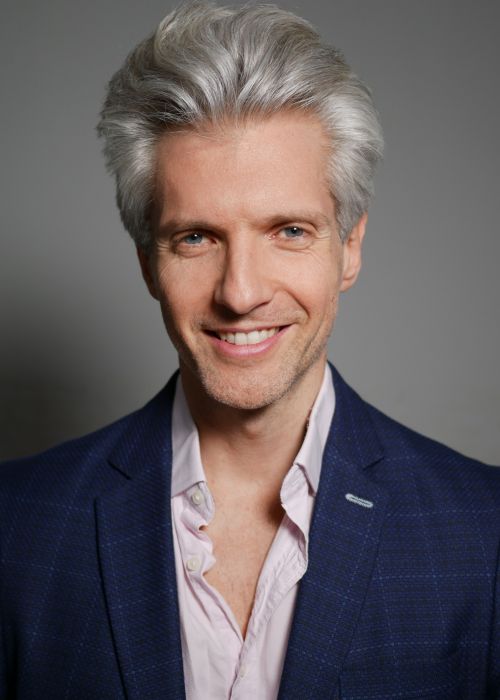

Marco Biagioli
Actor and TV Presenter
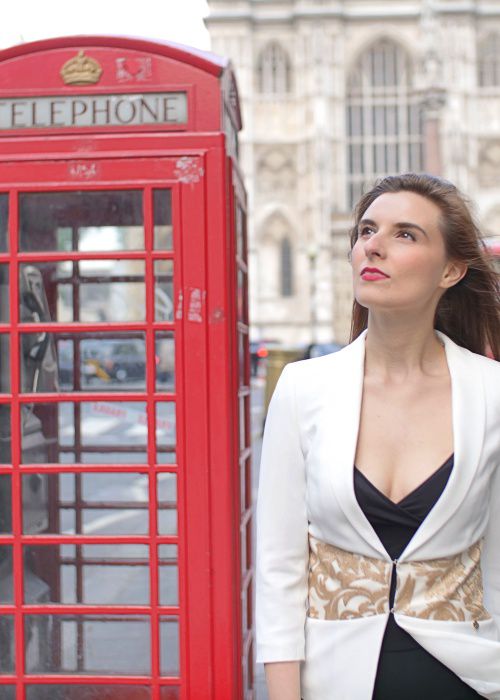

Erica Melargo
Actor and TV Presenter
In this Article
News
10 December 2021
“I sent my Résumé to NASA every week for a year”: Meet Aerospace Engineer Thomas Ivanco
2026-03-25 08:41:20
“Life Is Too Short to Be Shy”: How One Brazilian Immigrant’s Journey From Cancer Survivor to Soft Skills Entrepreneur Reveals London’s Hidden Loneliness Epidemic
21 February 2022
“You cannot change the past, but only you can change the future!”
16 January 2025
“I Wanted to Help People”: Deputy Supervisor Rick Marsh of Tuxedo, the Gem of New York, on Humans of the World with Marco and Erica
30 November 2021
“Il cielo è il limite e tu sai che puoi avere / Quello che vuoi, sii quello che vuoi”.
31 August 2021
“SIAMO TUTTI SULLA STESSA MUCCA”
30 July 2021
“Tu non puoi cambiare il passato, ma tu solo puoi cambiare il futuro!” Primo piano di aspirazioni e obiettivi del fotografo Arnt Eriksen.
2 July 2021
#TRUELIFE: Marco and Erica spotted at DAM Health Covid-19 Test centre
2 July 2021
#TRUELIFE: Marco ed Erica di nuovo in viaggio!

24 December 2021
61 Motivi per Trasferirti all’Estero
24 December 2021
61 Reasons Why You Should Move Abroad
8 November 2021
A Britalian in Rome: the actress Jane Alexander
16 July 2021
A caccia di aurore boreali
29 January 2023
A Chocolate Extravaganza In Vermont- Humans of the World third Season Flies Across The Pond
15 November 2024
A Conversation with Dr. Markus Naser: The Unlikely Mayor of Rothenburg ob der Tauber
15 November 2024
A Day in the Life of Oliver Gußmann: Rothenburg's Tourist Pastor
15 November 2024
A Glimpse into the Life of Laura: Embracing Family, Theater, and Cultural Diversity
23 July 2021
A journey into the atelier of Cipessa Prin
6 July 2022
A Miniature Artist Explains to Marco and Erica How to Put Things into Perspective
17 January 2022
A talent in… Nashville!