
Beyond the Screen: How One Creative’s Journey Reflects a Broader Shift in London’s Arts Community
2025-08-27 01:02 - By Marco Biagioli
Beyond the Screen: How One Creative’s Journey Reflects a Broader Shift in London’s Arts Community
By Marco Biagioli
When pandemic-induced uncertainty pushed former television producer Agnieszka Rosińska to write, she uncovered stories about identity, communication, and the myth of the “perfect life plan.” Her experience struck me as anything but isolated—it profoundly mirrors how London’s creative sector is redefining success, navigating belonging, and building resilience through sheer collaboration.
At Britalians TV, I (along with Erica) know that conversations are where journalism begins. We often note that interviews provide a solid foundation for our reporting, but they are never the finished story. The real work, in my view, lies in tracing those personal reflections outward—following the threads to wider developments, structural shifts, and shared community questions that require a deeper look.
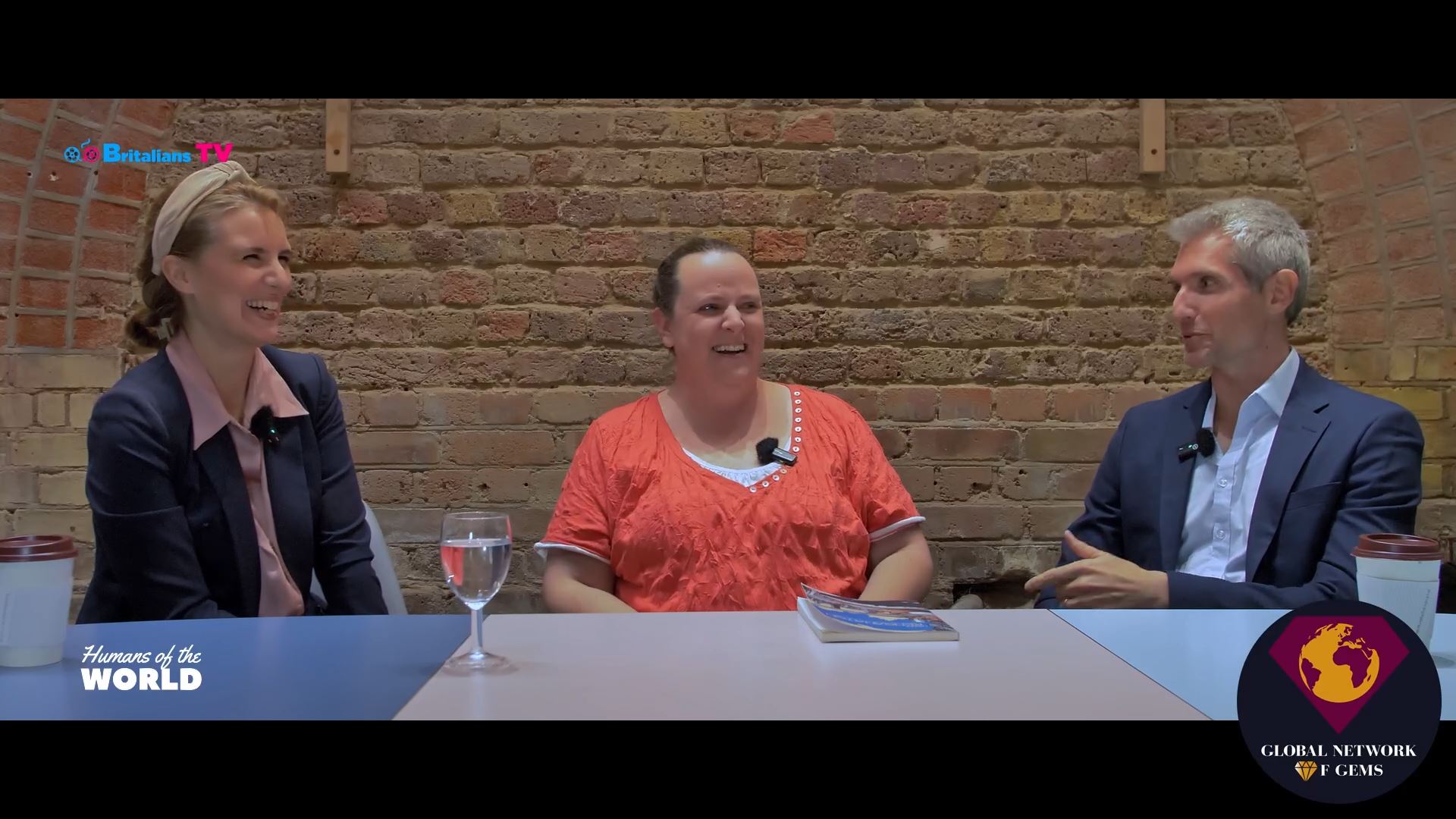
A recent sit-down with Polish-born media veteran Agnieszka Rosińska offered such a striking example. Over decades, Rosińska worked across London’s television and film industries as a producer, director, editor, and scriptwriter. When the pandemic halted traditional production pipelines, she pivoted to writing: a sprawling, character-driven science fiction series that has so far clocked over 4,000 pages. What emerged in our discussion was not merely a personal career change story, but an essential lens into three intersecting community realities: the post-pandemic restructuring of creative work, the ongoing negotiation of identity and language among diaspora professionals, and the growing cultural pushback against rigid life scripts.
The Creative Pivot and the Post-Pandemic Gig Economy
Rosińska’s shift from screen to page did not happen in a vacuum. Between 2020 and 2023, the UK’s television and film sector faced unprecedented project cancellations, funding delays, and shifting streaming strategies. Industry reports from ScreenBritain and the Creative Industries Federation clearly documented a surge in freelance creatives who diversified into publishing, digital content, and interdisciplinary projects simply to survive.
“I was asking myself what to do next,” Rosińska told Erica and me during our interview. “I still wanted to create, but the old machinery had stopped.” What followed was an intensive, self-directed writing period—often 16 to 18 hours a day—that culminated in her first published volume, Obake Ranganathan: Where Do I Go From Here?
This pattern feels increasingly common today. Independent publishing platforms, direct-to-audience distribution, and hybrid career models have allowed creators to bypass traditional gatekeepers. Yet, the transition carries friction that I find deeply concerning: loss of studio resources, unstable income streams, and the psychological weight of self-management. Community arts organizations across London are responding by building flexible co-working spaces, grant programs for mid-career pivots, and mental health support tailored to freelancers. To fully understand these shifts, we need additional perspectives from industry economists and creative union representatives to clarify whether this truly represents sustainable adaptation or just a new layer of precarity.
Language, Belonging, and the Migrant Creative Experience
Born in Poland and raised through the country’s post-communist transition, Rosińska moved to London with a career already underway but at a time when language remained secondary. In our conversation, she described English not as a barrier, but as a “common thread” that allows people from wildly different backgrounds to meet in the middle.
“You don’t need perfect grammar,” she explained. “You just need to try.” This sentiment echoes broader research on London’s migrant professional networks. According to data from the Greater London Authority, over 37% of London residents were born outside the UK, and a significant portion work in knowledge-intensive and creative sectors where communication naturally spans multiple linguistic registers. For diaspora creatives, storytelling often becomes a necessary tool for processing displacement, building community, and asserting presence in a city that both absorbs and continues to transform newcomers.
Rosińska’s book deliberately centers flawed, everyday characters navigating a harsh urban environment without any grand “save the world” mission. The narrative structure—a first-person journey marked by small decisions, shifting alliances, and unspoken tensions—mirrors how I feel many Londoners experience the city: not just as a backdrop, but as an active participant in identity formation. When Erica asked if the project was therapeutic, Rosińska’s response pointed to a much wider truth for me: creative output is rarely just personal catharsis. It is also communal documentation.
Rejecting the Five-Year Plan
One of the most striking themes that emerged during our chat was Rosińska’s philosophical resistance to linear life planning. When I pressed her about where she saw herself in five years, she told me: “I’m happy right here, right now. If you expect me to guess what kind of person I’ll be tomorrow, you’re slightly delusional.”
Her stance resonates with a growing cultural reckoning around milestone anxiety that I see everywhere. Sociological studies on millennials and Gen Z highlight rising rates of burnout tied to the “checklist life”: graduate, marry, mortgage, reproduce, retire. Economic instability, housing unaffordability, and shifting gender roles have made these benchmarks increasingly out of reach—or simply undesirable. Mental health advocates in London note a parallel rise in counseling sessions focused on perfectionism, impostor syndrome, and the emotional toll of comparing personal trajectories to curated social media timelines.
Rosińska’s protagonist embodies this rejection of fixed endpoints. He navigates survival, friendship, and self-doubt without needing a master plan. The narrative strongly suggests to me that meaning is not found at some destination, but in the daily act of showing up, questioning inherited beliefs, and allowing room for revision. As global wellness initiatives increasingly emphasize present-moment grounding over future-oriented achievement, Rosińska’s reflection offers a quiet counter-narrative to hustle culture: growth doesn’t require self-punishment; it requires attention.
Collaboration as Community Infrastructure
Perhaps the most tangible sign of London’s evolving creative ecosystem is how Rosińska built her project. She did not work in isolation. Her husband, a musician and graphic designer, contributed cover art, original soundtracks for each “bookisode,” and helped shape the project’s visual and auditory identity. The book’s Instagram presence (@obake.writer) functions less as promotional machinery and more like a shared creative journal—releasing music snippets, worldbuilding notes, and audience interactions in real time.
I see this model reflecting a broader shift in how London’s arts community operates under constrained funding environments. Independent creators are increasingly pooling skills, sharing audiences, and blending mediums just to stretch limited resources. Cultural policy experts note that cross-disciplinary collaboration is no longer simply an aesthetic choice; it is often a survival strategy. Yet without institutional support, these ecosystems remain fragile. Grants typically still require clear disciplinary boundaries, and many grassroots networks operate far below the radar of official funding bodies.
Erica and I noted during our chat that this interdependence is what makes local storytelling resilient for me. When art stops being a solo performance and becomes a shared infrastructure, it begins to function like community care: distributed, adaptive, and deeply human.
Why This Matters Beyond One Story
Agnieszka Rosińska’s journey from television floor to independent author is compelling on its own terms. But as Britalians TV strives to demonstrate, individual conversations only become journalism when they reveal systemic patterns. Her experience raises structural questions that affect thousands of Londoners: How do creatives adapt when traditional industries contract? What exactly does belonging look like for migrants navigating professional and linguistic integration? How do we measure success when the old milestones no longer align with reality? And fundamentally, how can communities best support artistic ecosystems built on collaboration rather than competition?
Answering those questions requires more than personal reflection. It demands input from local arts administrators, mental health practitioners, economic developers, and fellow creators who navigate these same uncertainties every day. It requires us to relentlessly track whether independent publishing models offer genuine sustainability or if they merely shift risk onto the individual creator. And it asks us to consider how a city as diverse as London can better fund, protect, and celebrate the quiet, cumulative work of cultural renewal.
When Erica Melargo and I wrap up an interview at Britalians TV, we rarely declare the story finished. We always leave room for follow-ups, for fact-checking, for connecting one voice to many others. Agnieszka Rosińska’s pivot from screen to page is a powerful testament to what happens when creatives stop waiting for permission and start building their own paths. More importantly, it’s a reminder that every community is made of people learning how to keep moving forward—not because they know exactly where they’re going, but because the journey itself is where we build our meaning together.
Written by
Marco Biagioli
Episodes in this press release
London ► S12 E4
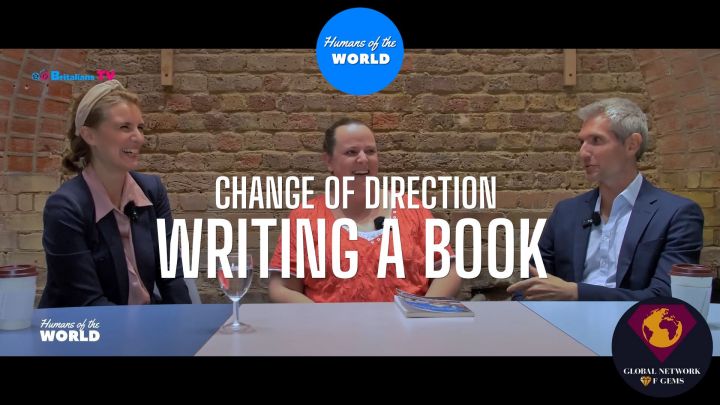
Change of Direction: Writing a Book
In this press release
Global Network of Gems
Featuring

Marco Biagioli
Actor and TV Presenter


Erica Melargo
Actor and TV Presenter
In this press release
Press Releases
Fri, 10 December 2021
“I sent my Résumé to NASA every week for a year”: Meet Aerospace Engineer Thomas Ivanco
2026-01-25 08:41
“Life Is Too Short to Be Shy”: How One Brazilian Immigrant’s Journey From Cancer Survivor to Soft Skills Entrepreneur Reveals London’s Hidden Loneliness Epidemic
Mon, 21 February 2022
“You cannot change the past, but only you can change the future!”
Thu, 16 January 2025
“I Wanted to Help People”: Deputy Supervisor Rick Marsh of Tuxedo, the Gem of New York, on Humans of the World with Marco and Erica
Tue, 30 November 2021
“Il cielo è il limite e tu sai che puoi avere / Quello che vuoi, sii quello che vuoi”.
Tue, 31 August 2021
“SIAMO TUTTI SULLA STESSA MUCCA”
Fri, 30 July 2021
“Tu non puoi cambiare il passato, ma tu solo puoi cambiare il futuro!” Primo piano di aspirazioni e obiettivi del fotografo Arnt Eriksen.
Fri, 2 July 2021
#TRUELIFE: Marco and Erica spotted at DAM Health Covid-19 Test centre
Fri, 2 July 2021
#TRUELIFE: Marco ed Erica di nuovo in viaggio!

Fri, 24 December 2021
61 Motivi per Trasferirti all’Estero
Fri, 24 December 2021
61 Reasons Why You Should Move Abroad
Mon, 8 November 2021
A Britalian in Rome: the actress Jane Alexander
Fri, 16 July 2021
A caccia di aurore boreali
Sun, 29 January 2023
A Chocolate Extravaganza In Vermont- Humans of the World third Season Flies Across The Pond
Fri, 15 November 2024
A Conversation with Dr. Markus Naser: The Unlikely Mayor of Rothenburg ob der Tauber
Fri, 15 November 2024
A Day in the Life of Oliver Gußmann: Rothenburg's Tourist Pastor
Fri, 15 November 2024
A Glimpse into the Life of Laura: Embracing Family, Theater, and Cultural Diversity
Fri, 23 July 2021
A journey into the atelier of Cipessa Prin
Wed, 6 July 2022
A Miniature Artist Explains to Marco and Erica How to Put Things into Perspective
Mon, 17 January 2022
A talent in… Nashville!